You see a red, itchy circle on your arm and immediately think of a parasite. But here is the strange thing: despite the name, Ringworm is not caused by a worm at all, but by a group of mold-like fungi called dermatophytes . These fungi love the same things we hate about damp basements-warmth and moisture-and they are surprisingly good at hitching a ride from one person to another. Whether it is a stubborn patch on your leg or the stinging itch between your toes, these infections are incredibly common, affecting roughly 20-25% of people worldwide.
| Type | Common Name | Primary Area | Key Symptom |
|---|---|---|---|
| Tinea corporis | Body Ringworm | Torso, arms, legs | Ring-shaped rash with clear center |
| Tinea pedis | Athlete's Foot | Feet and toes | Peeling, stinging, foul odor |
| Tinea capitis | Scalp Ringworm | Head/Scalp | Bald patches or pus-filled masses |
| Tinea cruris | Jock Itch | Groin/Inner thigh | Red, itchy scaly spots |
| Tinea unguium | Nail Fungus | Fingernails/Toenails | Thickened, yellow/brown nails |
Why Does Ringworm Happen?
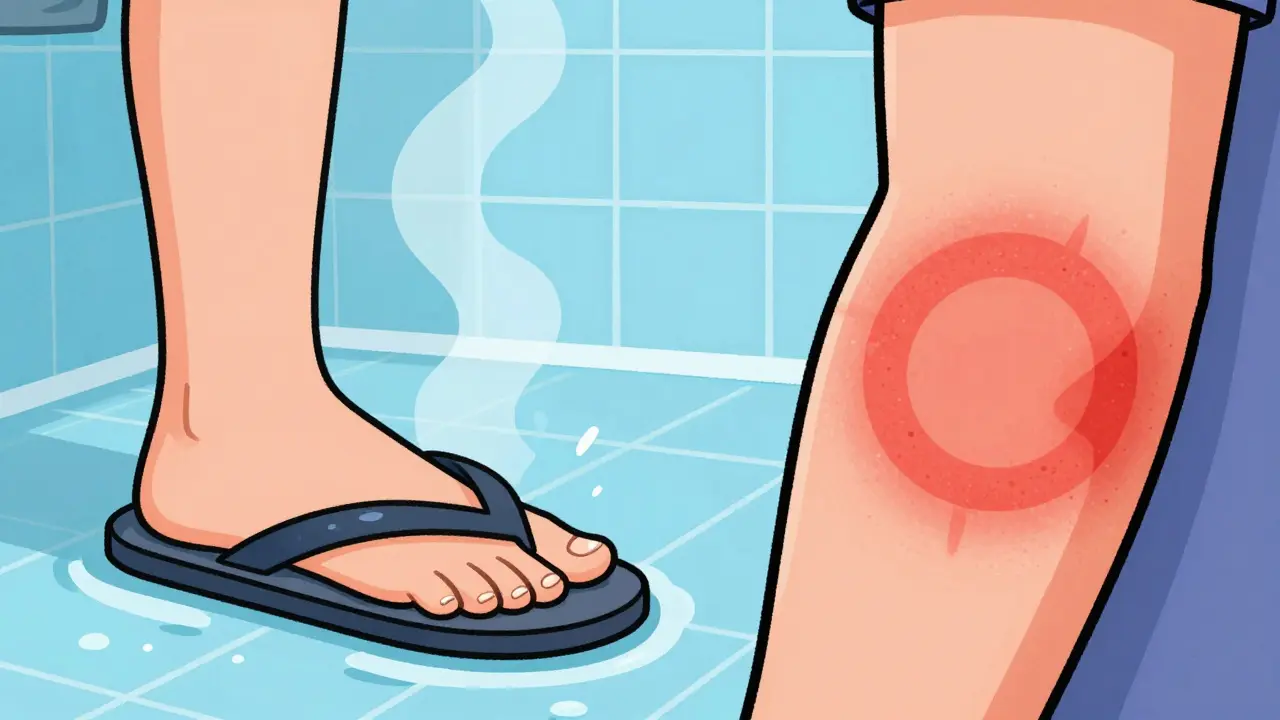
To understand why these rashes pop up, you have to look at what these fungi want. Dermatophytes thrive in temperatures between 25-30°C and humidity levels over 70%. This is why you often find them in locker rooms, public showers, and swimming pools. If you have Hyperhidrosis a condition causing excessive sweating , you are naturally more susceptible because you're essentially creating a portable sauna for fungi on your skin.
How does it get on you? About 60% of cases come from direct skin-to-skin contact. Another 30% happen when you touch contaminated objects, like a towel someone else used. The remaining 10% often come from pets. If your cat or dog has a mysterious patch of missing fur, be careful-they can pass it right to you. For those in contact sports, like wrestling, the risk is even higher, with some athlete populations seeing prevalence rates as high as 84%.
Spotting the Different Types of Tinea
While we call it all "ringworm," the medical world uses the term Tinea the general medical term for fungal skin infections caused by dermatophytes . Depending on where the fungus lands, it behaves differently.
Tinea corporis is the classic version. It starts as a small red bump and expands into a ring, usually 0.5 to 1.0 cm at first, but it can grow up to 5 cm in a few days. Tinea pedis, or athlete's foot, is more about the "burn." It causes the skin between the toes to peel and swell, often accompanied by a distinct foul odor. This accounts for about 15% of all ringworm cases.
Tinea capitis is particularly common in children. It doesn't just cause itching; it can lead to bald patches or a fungal skin infections complication called a kerion-a pus-filled mass that can cause permanent scarring if you don't treat it quickly. Then there is Tinea unguium, which hits toenails three times more often than fingernails because shoes trap moisture and heat perfectly for the fungus to dig in, making the nail 2-3 times thicker than normal.
Choosing the Right Antifungal Cream
For most skin infections, a topical cream is the first line of defense. You don't always need a prescription, but you do need to pick the right active ingredient. Not all Antifungal Creams topical medications designed to kill or inhibit the growth of fungi are the same.
- Terbinafine is often the gold standard for speed. A 1% cream has an 80-90% efficacy rate and often shows results in 3-5 days. It is the active ingredient in popular brands like Lamisil AT.
- Clotrimazole is a reliable 1% concentration cream that works in 70-80% of cases, though it usually takes 7-10 days to see a visible change.
- Miconazole (2% concentration) and Ketoconazole (2% concentration) are also effective, with success rates between 65-85%.
But here is the catch: creams can't reach everything. If the infection is in your scalp or deep in your nails, a cream won't cut it. You'll need oral medications, like a 250mg daily dose of terbinafine for several weeks. These have a cure rate of 85-90% for scalp infections, but they require a doctor's oversight because they can affect liver enzymes.
The Danger of Stopping Treatment Too Early
One of the biggest mistakes people make is stopping their cream as soon as the red ring disappears. It feels like you've won, but the fungus is often still hiding in the deeper layers of the skin. Data from patient forums shows that 68% of people stop treatment prematurely, and nearly half of those people see the infection come back.
If you want it gone for good, you have to follow the full course-usually 2 to 4 weeks of twice-daily application. Starting early also helps; treating it at the first sign of a rash can shave 5-7 days off your total healing time. If you wait, the infection can spread to cover 30-50% more of your skin within just two weeks.
Natural Remedies vs. Science
You'll see a lot of advice online about using tea tree oil to treat ringworm. While some people swear by it, the science is less convincing. A 2021 Cochrane Review found that pharmaceutical antifungals have a 70-90% clearance rate, while tea tree oil only manages about 40-50%. If you're dealing with a mild spot, a natural approach might work, but if you're in a rush to clear it up-especially for a child going back to school-stick with the proven medical options.
How to Stop the Cycle of Reinfection
Getting rid of the rash is only half the battle. If you don't change your environment, the fungus will just move back in. Think of it as "fungus-proofing" your life.
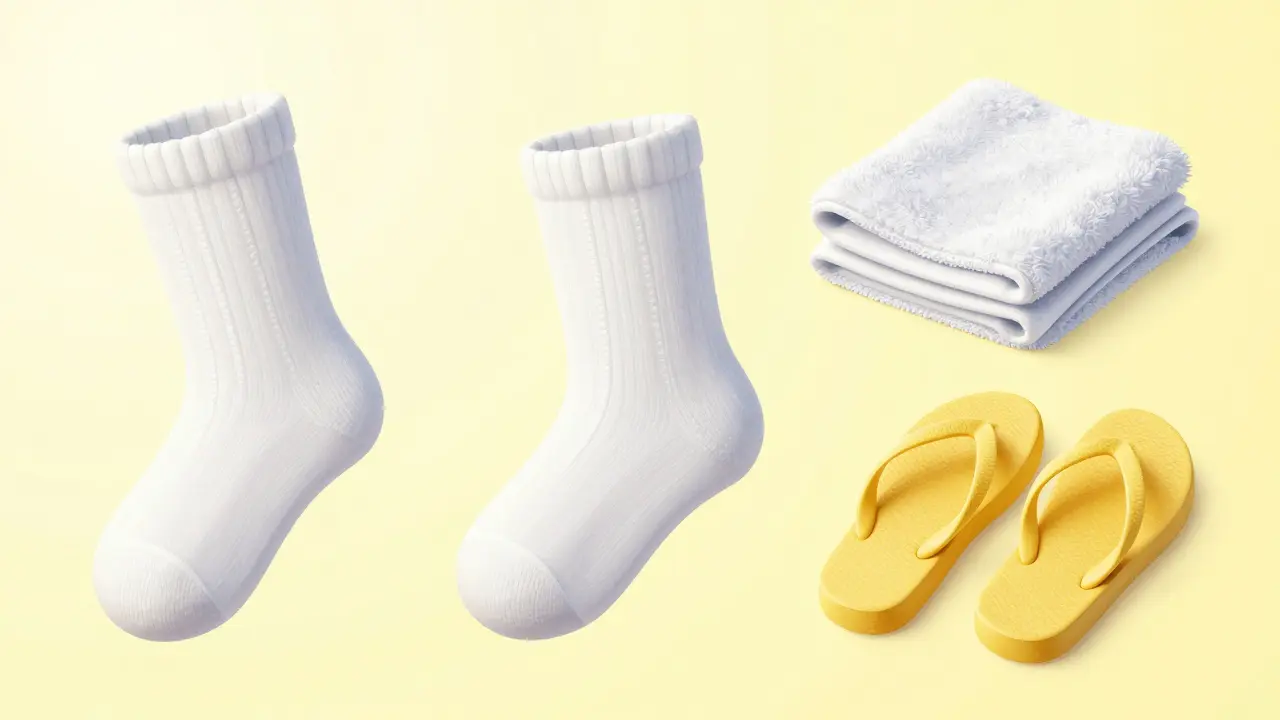
- Footwear is non-negotiable: Never walk barefoot in public showers or gym locker rooms. Using flip-flops reduces your risk by 45%.
- Dry is your best friend: Fungus hates dry skin. Dry yourself thoroughly after showering, especially between the toes and in skin folds.
- Socks matter: Change your socks every day. If you sweat a lot, change them twice.
- Stop sharing: Towels, bed sheets, and clothing are primary vehicles for transmission. Using your own gear reduces the risk by 30%.
Is ringworm contagious?
Yes, highly. It spreads through direct skin-to-skin contact, touching contaminated surfaces like towels or gym mats, and even through contact with infected pets like cats and dogs.
How long does it take for ringworm to go away?
With consistent use of antifungal creams, most body ringworm infections clear up in 2 to 3 weeks. However, scalp and nail infections can take several weeks or months of oral medication.
Can I treat ringworm without a prescription?
Yes, over-the-counter creams containing terbinafine or clotrimazole are available and effective for skin and foot infections. However, you need a prescription for oral medications used for scalp or nail fungus.
Why is my ringworm coming back?
The most common reason is stopping treatment as soon as the visible rash disappears. The fungus often persists invisibly, and without the full course of medication, it quickly regrows.
Are there any risks if I don't treat it?
Untreated ringworm can spread rapidly over the skin. In children with scalp infections, it can lead to a kerion, which may cause permanent hair loss or scarring.
Next Steps for Recovery
If you are currently dealing with a rash, start with an over-the-counter terbinafine cream for the fastest results. Apply it twice daily and set a calendar reminder to keep going for at least 14 days, even if the skin looks clear. If you notice the infection is on your scalp, in your nails, or if you have a compromised immune system, head to a clinic immediately. Immunocompromised individuals have failure rates 3.5 times higher than the general population and need professional medical management to avoid deeper infections.