
Key Takeaways for Providers
- The need for a specialty pharmacy is driven by the service model (monitoring, storage, training), not the brand-generic status of the drug.
- Biosimilars act as the functional generics for biologics and almost always require specialty pharmacy distribution.
- Expect longer turnaround times (averaging 7.2 days) compared to retail pharmacies (1.2 days).
- Prior authorization remains a significant bottleneck for both brand and generic specialty options.
Why Generic Specialty Drugs Still Need Specialized Handling
It is a common misconception that once a drug goes generic, it can move to a standard retail pharmacy. In the specialty world, this isn't always true. Many manufacturers establish mandatory distribution programs. If a manufacturer decides a drug must go through a specialty channel, it stays there regardless of whether it is the original brand or a generic version. For many providers, the distinction between brand and generic becomes almost irrelevant because the clinical requirements don't change. A generic version of a complex drug still requires the same temperature-controlled shipping and the same Risk Evaluation and Mitigation Strategies (REMS) mandated by the FDA. If a patient is using a generic small-molecule specialty drug that requires a specific infusion protocol, a retail pharmacist simply isn't equipped to provide the necessary oversight.The Provider's Workflow: Navigating the Dispensing Process
Dispensing a generic specialty drug is far more involved than a standard "drop-off and pick-up" transaction. Providers must coordinate a multi-step workflow to ensure the patient actually receives their medication.- Prescription Intake & Verification: The specialty pharmacy verifies the dose and the patient's eligibility.
- Prior Authorization (PA): This is often the biggest hurdle. Even for generics, insurance companies may require extensive documentation to prove the drug is medically necessary.
- Financial Assistance: Coordinating copay cards or manufacturer grants to make the drug affordable.
- Clinical Assessment: Pharmacists and nurses provide patient counseling and training on administration (e.g., how to use a subcutaneous injector).
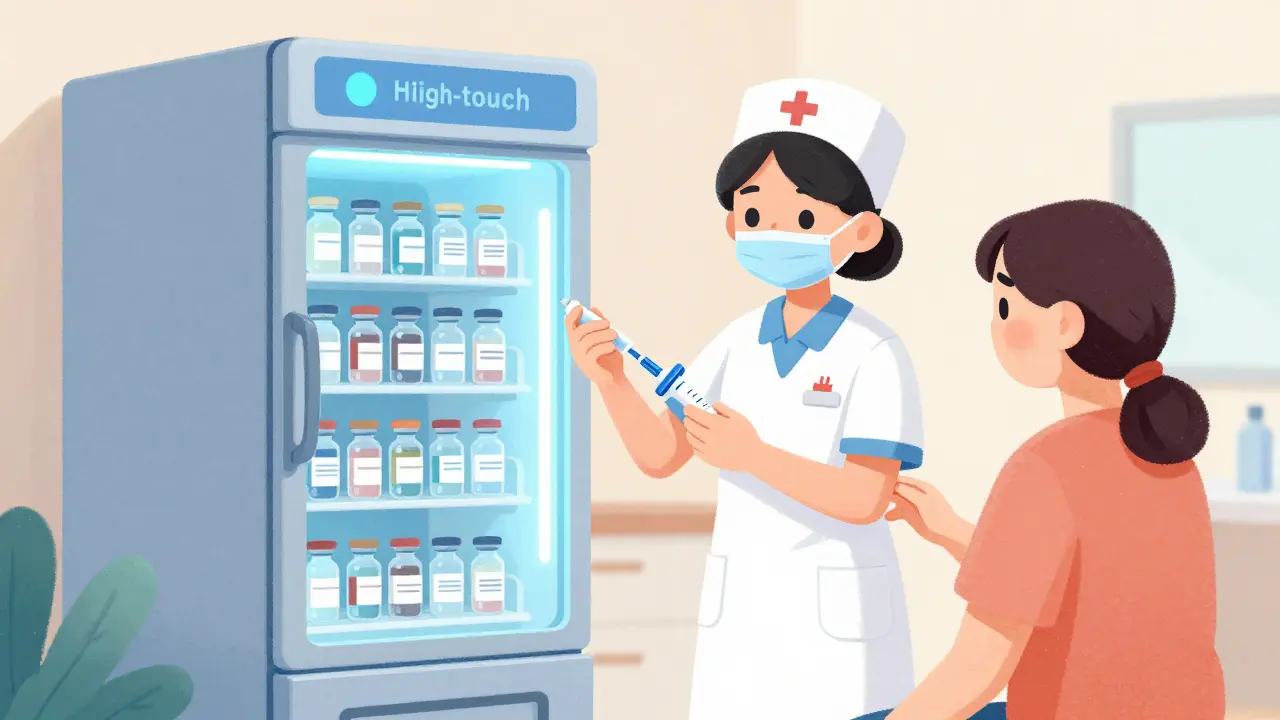
- Specialized Dispensing: The drug is packed in temperature-controlled packaging (typically 2-8°C) and shipped directly to the patient or clinic.
Comparing Specialty vs. Retail Dispensing for Generics
When deciding where to send a prescription, it's helpful to look at the trade-offs. While retail pharmacies are faster, they lack the clinical depth required for complex therapies.| Feature | Specialty Pharmacy | Retail Pharmacy |
|---|---|---|
| Average Turnaround Time | 7.2 Days | 1.2 Days |
| Patient Monitoring | High (Nurses, Care Coordinators) | Low (Pharmacist only) |
| Cold Chain Logistics | Integrated (2-8°C shipping) | Limited/Patient-dependent |
| Documentation Needs | High (12-15 data elements) | Low (5-7 data elements) |
| Clinical Expertise | Disease-specific (e.g., Oncology) | Generalist |
Managing the Patient Experience During Transitions
Moving a patient from a branded specialty drug to a generic or biosimilar version can be a point of friction. Patients often worry about the quality of the generic or the change in their care team. Interestingly, data suggests that 68% of patients prefer to stay with the same specialty pharmacy during this transition. Why? Because they have already built a relationship with the care coordinators and nurses who know their history. However, not all experiences are positive. Some patients report higher copays when moving to a specialty pharmacy for a generic that could have been filled at a retail store. As a provider, it's important to manage these expectations. Explain that the higher cost or longer wait is often a result of the intensive monitoring and safety protocols required for that specific therapeutic class, not just the drug itself.The Rise of White Bagging and Brown Bagging
As providers, you've likely encountered "white bagging" or "brown bagging." This is where the specialty pharmacy dispenses the medication and ships it directly to the clinic (white bagging) or the patient brings it into the clinic (brown bagging) for administration. This model now accounts for about 27% of specialty pharmacy volume. It is becoming increasingly common for both branded and generic specialty medications. While it allows the pharmacy to handle the complex insurance and shipping logistics, it can create administrative burdens for the clinic, which must then manage the storage and administration of a drug they didn't purchase directly. This trend is pushing more health systems to bring specialty dispensing in-house to regain control over the patient experience.Future Outlook: The Biosimilar Wave
With new CMS rules requiring Medicare Part D plans to cover all FDA-approved biosimilars, the volume of generic specialty drugs is expected to surge. Industry predictions suggest a 40% increase in biosimilar volume by 2026. This means providers will need to be even more diligent about coordinating with specialty pharmacies to avoid delays in therapy. We are also seeing a massive consolidation in the market, with giants like OptumRx, CVS Specialty, and Express Scripts dominating the landscape. While these large players offer scale, smaller regional pharmacies often provide more personalized care. Depending on your patient's needs, choosing a smaller provider might lead to better adherence and satisfaction.Can I send a generic specialty prescription to a retail pharmacy?
Only if the manufacturer allows it and the drug doesn't require specialized handling. If the drug requires strict cold-chain storage, REMS protocols, or intensive patient training, a specialty pharmacy is necessary regardless of whether it's brand or generic.
Why does it take so much longer to get a generic specialty drug than a retail generic?
Specialty pharmacies have a more complex workflow. The average turnaround is 7.2 days because they must manage prior authorizations, coordinate insurance benefits, and ensure specialized packaging and shipping, whereas retail pharmacies typically just verify the script and dispense.
What is the difference between a generic and a biosimilar in specialty pharmacy?
Traditional generics are chemically identical copies of small-molecule drugs. Biosimilars are functional equivalents of large-molecule biological drugs. Because they are produced in living cells, they aren't exact copies but are highly similar in safety and effectiveness.
Does the cost of the drug determine if it goes to a specialty pharmacy?
Not necessarily. While most specialty drugs are expensive, the decision is based on the service model-the need for monitoring, administration training, and specialized storage-rather than the price point alone.
How do I help my patient avoid delays during the transition to a generic specialty drug?
Start the prior authorization process early and encourage the patient to stay with their current specialty pharmacy if they have an established relationship with the clinical team. Using Real-Time Prescription Benefit tools can also shave days off the waiting period.


1 Comments
Trey Kauffman April 10, 2026
Oh sure, because a seven day wait for a drug is just a "workflow challenge" and not a complete disaster in patient care. Truly revolutionary stuff here. 🙄