

Generics make up 90.7% of all prescriptions filled in the U.S. - and they save patients and the system billions every year. But behind that impressive number is a quiet, real-world problem: not all generics are created equal. For pharmacists, spotting the ones that don’t perform like they should isn’t optional - it’s part of the job.
What Makes a Generic Problematic?
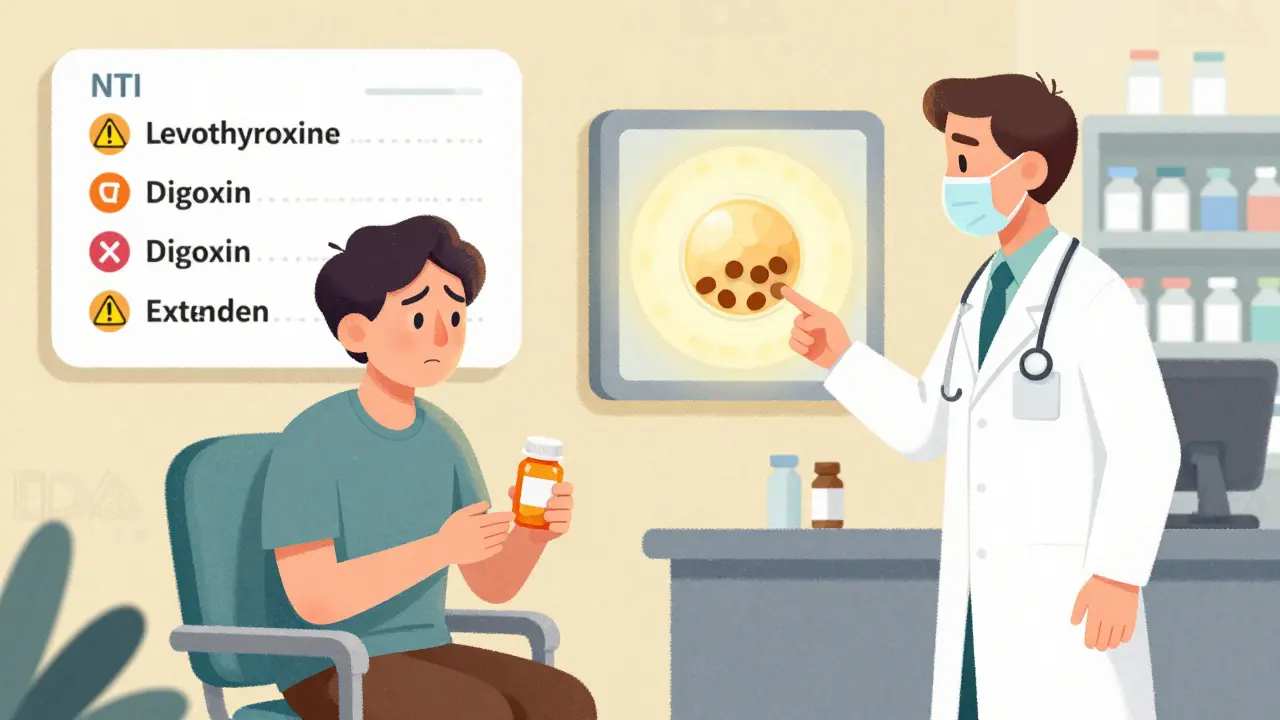
A generic drug must contain the same active ingredient, dose, and route as the brand-name version. The FDA requires it to be bioequivalent - meaning the body absorbs it within 80% to 125% of the brand’s rate. That sounds tight. But here’s the catch: 20% variation is allowed. For most drugs, that’s fine. For others, it’s dangerous. Take levothyroxine, used to treat hypothyroidism. A patient stable on one generic manufacturer’s version might switch to another - and suddenly their TSH spikes from 2.1 to 8.7. That’s not a fluke. It’s a documented pattern. The FDA has flagged this drug as one of the 18 with a narrow therapeutic index (NTI), where even small changes in blood levels can cause serious harm. Same goes for warfarin, phenytoin, and digoxin. In digoxin, switching generics leads to 12.7 adverse events per 10,000 prescriptions - more than triple the rate of non-NTI drugs. The issue isn’t always the active ingredient. It’s the fillers, the coating, the release mechanism. Extended-release pills are especially tricky. In 2020, FDA testing found that 7.2% of generic extended-release opioids failed dissolution tests - meaning the drug didn’t release properly in the body. That’s not a typo. That’s 7 out of every 100 pills that might not work as intended.When to Flag a Generic - The Red Flags
Pharmacists don’t need to wait for a patient to end up in the ER. There are clear, actionable signs that a generic may be causing trouble:- Therapeutic failure within 2-4 weeks of switching. If a patient’s blood pressure suddenly spikes after switching generic hypertension meds, or their seizures return after changing their anticonvulsant, that’s a signal. Don’t assume noncompliance - check the manufacturer.
- Unexplained side effects. A patient says, “This new pill makes me nauseous” or “I feel jittery now.” If they’ve switched generics recently, that’s not coincidence. Document it. Report it.
- NTI drugs with multiple switches. If a patient has been on three different generic versions of levothyroxine in a year, that’s a red flag. The American Society of Health-System Pharmacists says 42% of generic errors come from switching between similar-looking or sounding products. Don’t let convenience override safety.
- Look-alike, sound-alike names. Oxycodone/acetaminophen and hydrocodone/acetaminophen are frequently confused. So are amitriptyline and amitriptiline. A typo in the prescription or a misread label can lead to overdose. Always verify the manufacturer and strength - even if it’s “just a generic.”
- Reports of inconsistent performance. If multiple patients on the same generic report the same issue - like a delayed-release omeprazole not working as well - it’s not anecdotal. It’s systemic. Track the batch and manufacturer.
The FDA’s Orange Book Isn’t Just a Reference - It’s Your First Line of Defense
Every pharmacist should know how to use the FDA’s Orange Book. It’s not a dusty manual. It’s a live tool. It lists every approved generic and assigns a therapeutic equivalence code:- AB = Therapeutically equivalent. Safe to substitute.
- BX = Not therapeutically equivalent. Don’t substitute without consulting the prescriber.
Complex Generics Are the Hidden Risk
It’s easy to assume all generics are simple pills. But the real challenge lies in complex formulations: inhalers, topical creams, injectables, and transdermal patches. These are harder to copy. And when they’re copied poorly, the results can be catastrophic. In 2022, the FDA found 47 generic drug shortages directly tied to manufacturing quality issues. Many involved complex generics. One example: a generic version of diltiazem CD (extended-release) had inconsistent dissolution profiles. Between January 2021 and March 2022, 47 patients experienced therapeutic failure - chest pain, irregular heartbeats, hospitalizations. The FDA issued a public warning. But how many pharmacists saw it? How many checked their inventory? The takeaway: don’t assume a generic is safe just because it’s approved. Complex generics need extra scrutiny. If you’re dispensing a generic inhaler or patch and a patient reports reduced effectiveness, investigate the manufacturer. Ask for the lot number. Report it to MedWatch.Patients Notice the Difference - Even When They Can’t Explain It
A 2023 Consumer Reports survey found that 78% of patients are happy with generics. But 22% reported different side effects after switching manufacturers. That’s more than 1 in 5. And 37.6% of patient complaints submitted to the FDA between 2020 and 2023 cited inconsistent effectiveness. One patient on Reddit, u/MedSafetyPharmacist, shared a case: a woman switched from one levothyroxine brand to another and went from feeling fine to exhausted, gaining 15 pounds in six weeks. Her TSH jumped from 2.1 to 8.7. The pharmacist recognized the pattern - switched her back. Her symptoms resolved in three weeks. Patients don’t always know the science. But they know how they feel. When they say, “This one doesn’t work like the last one,” listen. Don’t dismiss it as placebo. Document it. Track the manufacturer. It’s not just about compliance - it’s about trust.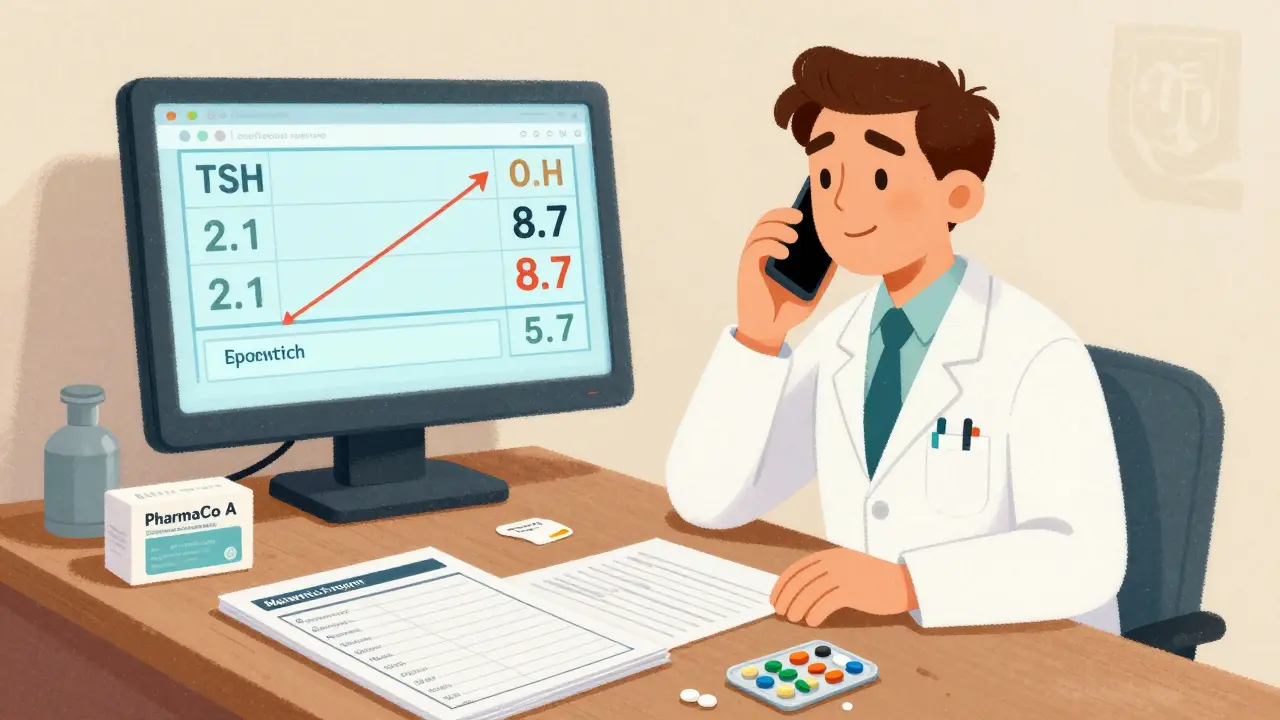
What Pharmacists Can Do - Practical Steps
You don’t need to be a regulatory expert to make a difference. Here’s what works:- Always record the manufacturer and lot number. If a patient has an issue, you need to trace it. 68.4% of therapeutic failure investigations require this data.
- Use the Orange Book before dispensing NTI drugs. Don’t rely on default substitutions. Check the code.
- Ask patients: “Have you switched generics recently?” Make it part of your intake. It’s quick. It’s critical.
- Report adverse events to MedWatch. The FDA’s reporting system takes under 5 minutes. Your report could trigger a safety alert.
- Know your state’s laws. Four states - Massachusetts, New York, Texas, and Virginia - have special rules for NTI drugs. In others, presumed consent laws may allow automatic substitution. But you still have the right - and duty - to refuse if you believe it’s unsafe.
It’s Not About Being Anti-Generic - It’s About Being Pro-Safety
Generics are essential. They make medicine affordable. But affordability shouldn’t come at the cost of effectiveness. The FDA’s standards are strong - but they’re not perfect. And the system relies on pharmacists to catch what the algorithms miss. You’re not the enemy of cost savings. You’re the guardian of outcomes. When a patient’s heart rate goes haywire after a generic switch, or their seizures return, it’s not the drug’s fault - it’s a failure in the chain. And you’re the last link before it reaches them. The next time a patient says, “This pill doesn’t feel right,” don’t shrug. Don’t assume it’s in their head. Check the label. Check the manufacturer. Check the Orange Book. Report it. You might just save a life.Are all generic drugs safe to use?
Most generics are safe and effective - over 90% of prescriptions in the U.S. are filled with generics, and the vast majority perform just like brand-name drugs. But not all are equal. Some, especially those with narrow therapeutic indexes (like levothyroxine or warfarin) or complex formulations (like extended-release pills or inhalers), can vary in performance between manufacturers. Pharmacists should review therapeutic equivalence codes in the FDA’s Orange Book and flag any unexplained changes in patient response after a switch.
What is a narrow therapeutic index (NTI) drug?
An NTI drug has a very small difference between the dose that works and the dose that causes harm. Even minor changes in blood levels - like those caused by switching generic manufacturers - can lead to treatment failure or serious side effects. Examples include levothyroxine, warfarin, phenytoin, digoxin, and tacrolimus. The FDA has identified 18 drugs as NTIs, and pharmacists should avoid automatic substitution with these unless the prescriber approves.
How do I know if a generic is therapeutically equivalent?
Use the FDA’s Orange Book. It assigns each generic drug a therapeutic equivalence code: AB means it’s approved as equivalent to the brand-name drug. BX means it’s not considered equivalent - often due to unresolved bioequivalence issues. Always check this code before dispensing, especially for NTI drugs. If a generic has a BX rating, consult the prescriber before substituting.
Can a generic drug cause new side effects?
Yes. While the active ingredient is the same, generics can use different inactive ingredients - fillers, dyes, binders - that may cause reactions in sensitive patients. Some patients report nausea, dizziness, or fatigue after switching manufacturers, even when the dose is unchanged. These aren’t always “all in their head.” Document the change, track the manufacturer, and report to MedWatch if the reaction is severe or recurring.
What should I do if I suspect a problematic generic?
First, confirm the patient’s symptoms and recent medication changes. Check the manufacturer and lot number. Consult the FDA’s Orange Book for the therapeutic equivalence code. If the drug is an NTI or has a BX rating, contact the prescriber to discuss alternatives. Report the issue to the FDA’s MedWatch program - even one report can trigger an investigation. Keep detailed records: this helps identify patterns and protect future patients.




11 Comments
Stephen Craig January 3, 2026
Not all generics are equal. I've seen patients crash after a switch-TSH spikes, seizures return, the whole deal. It’s not placebo. It’s pharmacology.
Connor Hale January 4, 2026
The Orange Book is underused. Most pharmacists don’t even check it unless they’re forced to. We’ve got the tool, but we’re not using it like it’s life-or-death-because it is.
Roshan Aryal January 6, 2026
USA thinks generics are some kind of miracle because they’re cheap. Meanwhile, India and China make 80% of the world’s API-and half of them wouldn’t pass a high school lab test. You think the FDA is keeping up? Please. This isn’t safety-it’s corporate convenience dressed up as policy.
Jack Wernet January 8, 2026
As someone who has worked in community pharmacy for over two decades, I can attest that the most dangerous assumption is that ‘a generic is a generic.’ The data is clear, the cases are documented, and the responsibility lies squarely with the dispenser. We must act-not because we’re paid to, but because we swore to do no harm.
Terri Gladden January 8, 2026
OMG I JUST HAD THIS HAPPEN TO MY MOM!! She switched from one levothyroxine to another and went from ‘fine’ to ‘I can’t get out of bed’ in 3 weeks!! I called the pharmacy and they were like ‘oh that’s normal’ but NO IT’S NOT!!! She gained 20 lbs and cried every day!! I had to beg for the old one back and now she’s human again!!
Jennifer Glass January 10, 2026
I’ve noticed patients will say ‘this one makes me sleepy’ or ‘it doesn’t work like before’-and we write it off as ‘patient perception.’ But what if their perception is the only early warning system we’ve got? Maybe we need to treat patient reports like vital signs.
melissa cucic January 11, 2026
It’s not enough to check the Orange Book once; it must be checked every single time a generic is dispensed, especially for NTI drugs. The code can change. The manufacturer can change. The batch can change. And if you’re not tracking every variable, you’re not practicing pharmacy-you’re gambling.
en Max January 12, 2026
Therapeutic equivalence is a binary classification system applied to a multidimensional pharmacokinetic problem. The AB/BX dichotomy is a heuristic, not a physiological truth. The FDA’s bioequivalence thresholds (80–125%) are statistically acceptable but clinically insufficient for drugs with steep dose-response curves. We are systemically underestimating inter-patient variability and intra-formulation heterogeneity.
Angie Rehe January 13, 2026
Stop acting like pharmacists are heroes for doing their job. The system is broken. Why should a pharmacist have to call the prescriber every time a patient gets sick from a generic? Why isn’t the pharmacy chain blocking BX-rated drugs at the point of sale? This isn’t professional diligence-it’s damage control because the FDA and insurers refuse to fix the root problem.
Jacob Milano January 13, 2026
My cousin’s dad was on digoxin for years-switched generics, ended up in the ER with a heart rate of 150. The pharmacist didn’t even blink. But when my cousin showed up with the FDA warning printout? They switched him back immediately. People don’t realize: you’re not just handing out pills. You’re handing out trust.
Dee Humprey January 14, 2026
Always note the manufacturer and lot. Always. I keep a little notebook in my pocket. One patient had 3 different levothyroxine switches in 8 months. I tracked them. Found a pattern. Reported it. Two weeks later, the FDA issued a warning on that batch. I didn’t save the world-but I saved her from another hospital trip. 🙏