
Bupropion Seizure Risk Calculator
Calculate Your Seizure Risk
Assess your personalized seizure risk based on your dosage and medical history.
Important Safety Notice
Seizure risk increases significantly with higher doses and certain medical conditions. If you experience any of these symptoms, seek medical attention immediately:
- Muscle twitching or jerking
- Sudden confusion or blank stares
- Loss of consciousness
When you start taking bupropion - whether it's under the brand name Wellbutrin, Zyban, or Aplenzin - you're choosing a medication that works differently from most antidepressants. While SSRIs like Prozac or Zoloft boost serotonin, bupropion targets dopamine and norepinephrine. That’s why it’s often picked for people who struggle with sexual side effects or weight gain from other pills. But this unique mechanism also comes with a set of risks that aren’t talked about enough: insomnia, anxiety, and a real, measurable increase in seizure threshold.
Why Bupropion Causes Insomnia
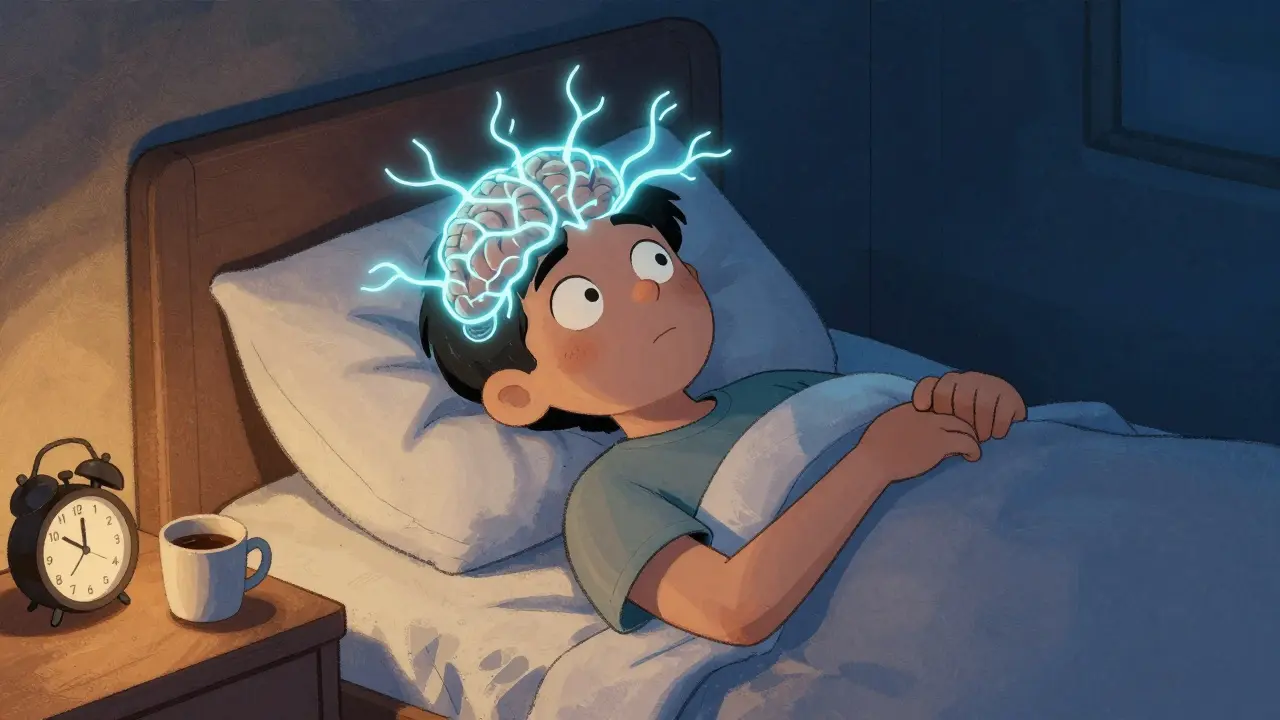
Insomnia isn’t just a side effect of bupropion - it’s one of the most common. Clinical trials show about 19% of users experience trouble sleeping, making it the third most frequent complaint after agitation and headache. Why? Because bupropion stimulates the central nervous system. It doesn’t just lift your mood - it lifts your alertness. That’s great if you’re sluggish all day, but terrible if you’re trying to wind down at night.
Most people don’t realize how timing matters. Taking bupropion in the afternoon or evening can keep your brain wired for hours. Doctors typically recommend taking it before 5 p.m., and if you’re on the sustained-release version (SR), splitting the dose so the last one is no later than mid-afternoon helps. One study found that 68% of patients who moved their dose to the morning saw sleep improve within a week.
Reddit users describe it as a "nerve buzz" that won’t shut off. Comments like "I was wide awake at 2 a.m. even though I took it at noon" are common. It’s not just in your head - it’s chemistry. The drug peaks in your bloodstream 3 hours after taking SR tablets, and that surge can interfere with melatonin production. If you’re already prone to sleep issues, bupropion might not be the best fit unless you’re strict about timing.
Anxiety: The First Week Trap
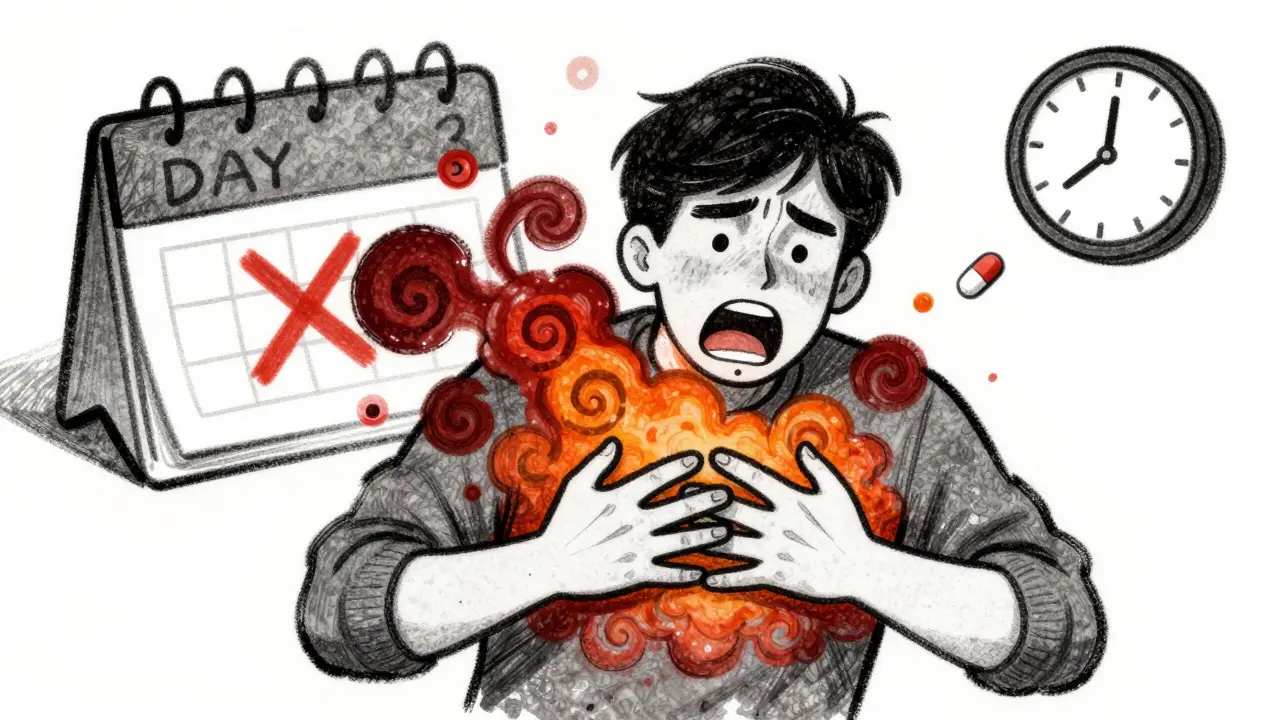
Many people start bupropion hoping to ease depression, only to feel worse in the first few days. Agitation, nervousness, and panic-like symptoms hit 20-25% of users in the first 7-14 days. This isn’t a sign the medication isn’t working - it’s a known reaction. Bupropion increases norepinephrine quickly, which can feel like a stress response before your brain adapts.
Unlike SSRIs, which often cause emotional blunting early on, bupropion can make you feel more emotionally raw. You might notice your heart racing, your hands shaking, or sudden waves of dread. These symptoms usually fade after two weeks as your brain adjusts. But for some, the anxiety is too intense to wait it out.
Doctors sometimes pair bupropion with a short-term low-dose benzodiazepine like lorazepam to help bridge that gap. Others recommend non-medication strategies: limiting caffeine, practicing breathing exercises, or avoiding screens before bed. If anxiety peaks after a dose increase - say, from 150mg to 300mg - it’s often a sign you need to slow down the titration. Rushing the dose ramp-up is one of the top reasons people quit bupropion.
The Seizure Risk: What No One Tells You
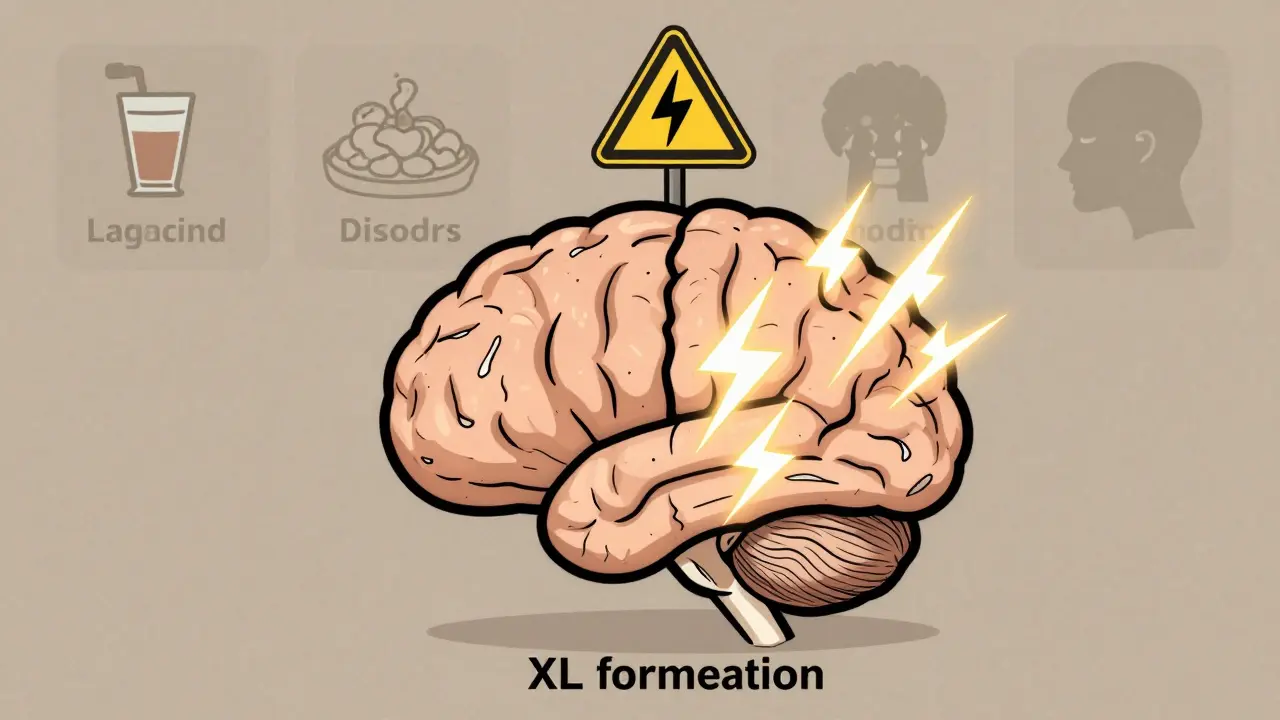
This is where bupropion stands apart from every other antidepressant. While SSRIs rarely, if ever, cause seizures, bupropion does - and the risk isn’t theoretical. At standard doses (≤450mg/day), about 0.4% of users have a seizure. That’s 40 times higher than the general population’s rate of 0.01%. But here’s the scary part: if you exceed 600mg/day, the risk jumps to 2-5%.
It’s not just about dosage. Certain factors multiply the danger:
- History of seizures or head trauma
- Eating disorders like anorexia or bulimia
- Severe liver disease
- Alcohol or drug withdrawal
- Taking other drugs that lower seizure threshold (like antipsychotics or stimulants)
One case report from 2023 described a 35-year-old woman who had her first seizure after increasing her bupropion SR dose to 300mg daily. She had no prior history. The drug’s peak plasma concentration - the highest level in your blood - is the trigger. That’s why the extended-release (XL) version is safer: it releases the drug more slowly, avoiding those sharp spikes. The FDA approved a new XL formulation in 2023 specifically to reduce this risk.
Warning signs aren’t always dramatic. Muscle twitching, uncontrolled jerking, or a sudden blank stare can be early signals. If you’ve ever felt like your body "short-circuited" for a second - even if you didn’t lose consciousness - tell your doctor. That’s not normal.
How Bupropion Compares to Other Antidepressants
Bupropion isn’t better or worse than SSRIs - it’s different. Here’s how it stacks up:
| Side Effect | Bupropion | SSRIs (e.g., Zoloft, Prozac) |
|---|---|---|
| Insomnia | 19% | 10-15% |
| Anxiety/Agitation | 20-25% | 10-20% |
| Sexual Dysfunction | 1-6% | 30-70% |
| Weight Change | 23% lose weight | Most gain weight |
| Seizure Risk | 0.4% at max dose | Near 0% |
That’s why bupropion is the third most prescribed antidepressant in the U.S., with over 17 million prescriptions in 2022. People choose it for the right reasons: no sexual side effects, no weight gain, and sometimes, a lift in energy. But if you have a history of seizures, an eating disorder, or drink heavily, the trade-off isn’t worth it.
Who Should Avoid Bupropion?
Not everyone is a candidate. The FDA and major medical groups list clear red flags:
- Current or past seizure disorder
- Eating disorders (anorexia, bulimia)
- History of head injury or brain tumor
- Severe liver disease
- Alcohol or substance withdrawal
- Use of MAO inhibitors in the last 14 days
- High blood pressure (systolic over 180 mm Hg)
Even if you don’t have any of these, your doctor should still check your personal and family history. A cousin who had a seizure at 20? That matters. A parent with liver disease? That’s a signal to go slow. The 2023 American Psychiatric Association survey found that 78% of psychiatrists now screen for all seizure risk factors before prescribing - a big shift from just five years ago.
What to Do If Side Effects Hit
If you’re on bupropion and something feels off, don’t panic - but don’t ignore it either.
For insomnia: Move your dose to the morning. Avoid caffeine after noon. Try a consistent sleep schedule. If it doesn’t improve in two weeks, talk to your doctor about switching to the XL version.
For anxiety: Give it 10-14 days. If it’s unbearable, ask about a short-term anti-anxiety aid. Don’t quit cold turkey - you could get withdrawal symptoms like dizziness or mood swings.
For seizure warning signs: Muscle twitches, confusion, sudden numbness, or staring spells? Call your doctor immediately. If you lose consciousness or have convulsions, call emergency services. This isn’t something to wait on.
Many people stay on bupropion because the benefits outweigh the side effects. But you need to know the signs, manage the timing, and be honest with your doctor about your history.
Final Thoughts
Bupropion is a powerful tool. It helps people quit smoking, lifts mood without killing libido, and can even help with weight loss. But it’s not a one-size-fits-all pill. The same traits that make it useful - the dopamine boost, the nervous system stimulation - are what make it risky for some.
If you’re considering bupropion, ask yourself: Do I have a history of seizures? Am I okay with possible sleep disruption? Can I take it early in the day? If you answered yes to all three, it might be a good fit. If not, there are other options - and that’s okay.
Medication isn’t about finding the "best" drug. It’s about finding the right one for your body, your habits, and your risks. Bupropion isn’t for everyone - but for the right person, it can change everything.





12 Comments
Brad Ralph February 12, 2026
Bupropion is basically caffeine with a prescription pad. 🤷♂️ I took it for 3 days and felt like I’d been hit by a Taser while watching a horror movie at 3 a.m. Sleep? Nah. But hey, no sex drive issues - so… win?
christian jon February 13, 2026
OH MY GOD. I CAN’T BELIEVE YOU’RE JUST NOW TALKING ABOUT THIS?!?!?!? I HAD A SEIZURE ON BUPROPION-YES, A FULL-ON, FLOPPY-LIMB, BIT-TONGUE SEIZURE-AFTER DOUBLING MY DOSE BECAUSE ‘I FELT FINE.’ DOCTORS DON’T WARN YOU. THEY JUST SAY ‘IT’S RARE.’ RARE?! MY NEIGHBOR’S CAT HAS A LOWER RISK THAN ME. THIS DRUG IS A TIKTOK CHALLENGE WITH A SYRINGE. #BUPROPIONISNOTAFREEPASS
Autumn Frankart February 13, 2026
This is all government propaganda. Bupropion is a mind-control tool disguised as an antidepressant. They don’t want you sleeping well because then you’d have time to think. And the seizures? That’s just the system rebooting your brain so you don’t question the system. I’ve seen the documents. The FDA is owned by Big Pharma. Wake up.
Sophia Nelson February 15, 2026
I took bupropion and it made me so anxious I started yelling at my dog. He didn’t even do anything. Now I’m on 3 meds and still hate myself. Why do people act like this is normal? You’re not ‘adjusting’-you’re being chemically tortured.
athmaja biju February 15, 2026
In India, we call this 'chemical overdrive'. No one here prescribes it unless you’re a soldier or a night-shift worker. We have better alternatives-Ayurveda, yoga, even just walking barefoot on grass. But Western medicine? Always pushing pills. I’m not surprised.
Robert Petersen February 16, 2026
Hey, I was in the same boat. Started bupropion, couldn’t sleep, felt like a nervous raccoon. But I stuck with it-moved my dose to 8 a.m., cut caffeine after 2 p.m., and within 10 days, my sleep came back. It’s not magic, but it’s manageable. You got this. 💪
Ernie Simsek February 16, 2026
LMAO the ‘seizure risk’ part is just a disclaimer so they don’t get sued. I’ve known 3 people who had micro-seizures-just a weird head jerk or blank stare-and they all kept taking it. ‘Oh, it’s fine, I’m fine.’ Bro. You’re not fine. You’re one more 300mg dose away from a hospital bed.
Joanne Tan February 16, 2026
ok so i took bupropion for 2 weeks and i swear i lost 8lbs and could finally focus at work?? but yeah i was up at 4am staring at the ceiling like a zombie. but worth it?? maybe?? idk. i just know i dont wanna go back to zoloft where i felt like a soggy blanket. 🤷♀️
Reggie McIntyre February 18, 2026
I’ve been on bupropion for 3 years. The insomnia? Yeah, I used to sleep with a weighted blanket and a fan blasting. The anxiety? It peaked at week 2, then vanished. The seizure risk? I have a cousin who had a seizure on it-no prior history. That’s why I get regular EEGs now. It’s not a villain. It’s a tool. But like a chainsaw. You need gloves.
Carla McKinney February 18, 2026
The fact that you’re even considering this drug without a full neurological workup is alarming. You’re not ‘just trying it out.’ You’re playing Russian roulette with your frontal lobe. And don’t get me started on the ‘no sexual side effects’ myth. That’s just because your libido’s been vaporized by dopamine overload. You’re not ‘liberated’-you’re chemically neutered.
Ojus Save February 19, 2026
i took bupropion for a month and i think it made me smarter? like i could finish books and not fall asleep. but yeah i couldnt sleep and my heart felt like it was doing the cha-cha. maybe its for me? idk. maybe i just need more coffee.
Stacie Willhite February 19, 2026
I just want to say-this post saved me. I was about to quit bupropion because I thought I was going crazy. Turns out the anxiety and insomnia were side effects, not a relapse. I moved my dose to 7 a.m., cut caffeine after noon, and started a 10-minute breathing routine before bed. It’s been 6 weeks. I’m sleeping. I’m calm. I’m not perfect-but I’m better. Thank you for the honest breakdown.