
When you pick up a generic pill at the pharmacy, you expect it to work just like the brand-name version. You’re not just saving money-you’re trusting the system to keep you safe. But what happens when the advertising on that generic drug tells a different story? What if the ad makes it seem like the brand-name version is safer, more effective, or even FDA-approved in a way the generic isn’t? That’s not just misleading-it’s illegal. And the consequences aren’t just fines. People stop taking their medication. Their health suffers. And companies pay millions in penalties.
What Counts as False Advertising in Generic Drugs?
False advertising in generic pharmaceuticals isn’t about a typo on a label. It’s about messaging that tricks patients or doctors into believing something that isn’t true. The FDA and courts have laid out clear rules: generic drugs must be bioequivalent to their brand-name counterparts. That means they deliver the same amount of active ingredient into your bloodstream at the same rate. But ads can’t say that’s enough. They can’t imply therapeutic equivalence for drugs with narrow therapeutic indexes-like levothyroxine or warfarin-unless there’s a formal FDA determination. And they definitely can’t suggest that generics are less safe just because they’re cheaper. Some common violations include:- Using visuals or language that mimics the brand-name product’s packaging or logo
- Claiming a generic is "FDA Approved" when it’s only been cleared for distribution
- Stating that a generic has "the same effectiveness" without proof from head-to-head trials
- Implying that a brand-name drug is superior because it’s more expensive
- Using terms like "health alert" or "dangerous" to describe generics without FDA-backed evidence
In 2024, the FDA issued a warning letter to Teva Pharmaceuticals after an ad suggested patients should avoid generic levothyroxine due to "unpredictable absorption." The claim wasn’t just false-it was dangerous. Patients stopped taking their meds. Thyroid levels spiked. Some ended up in the ER. The FDA didn’t just shut it down. They made it public.
The Laws That Stop False Claims
There’s no single rulebook. Instead, multiple laws work together to keep generic drug advertising honest. The main ones are:- 21 U.S.C. § 352 (FD&C Act) - This is the core law. It says drug labeling and advertising must be truthful, not misleading, and include all major risks.
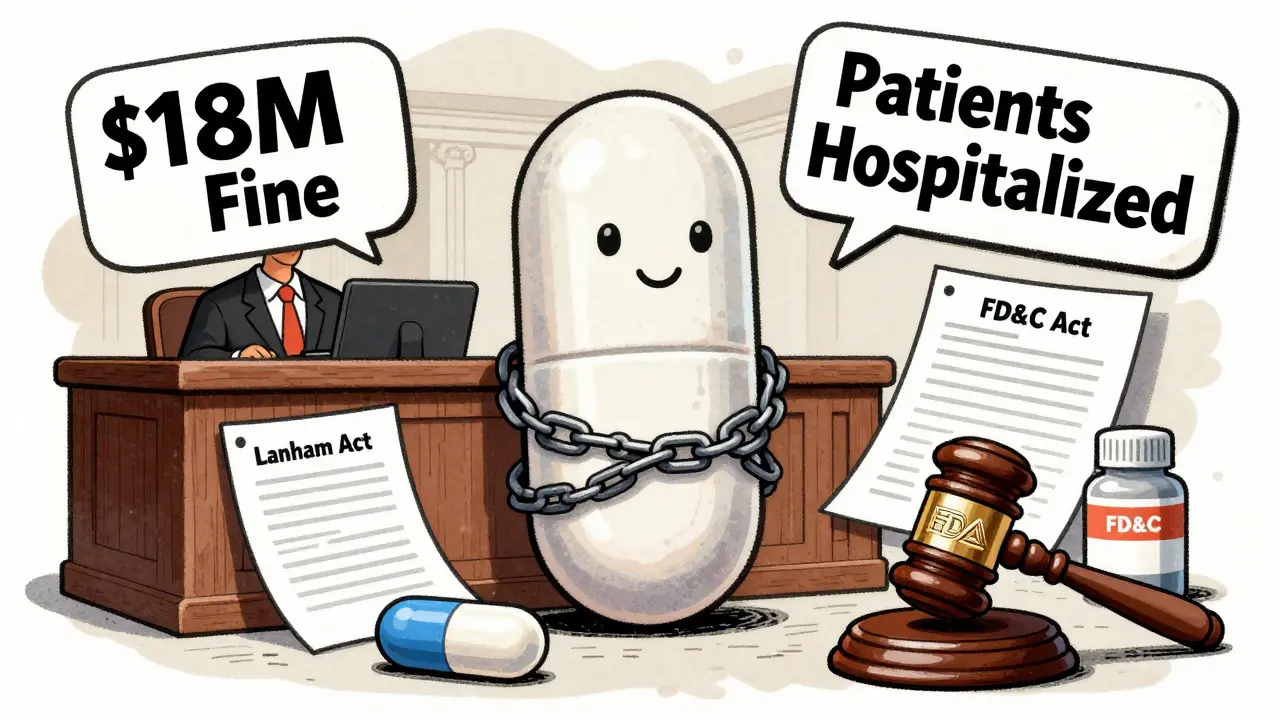
- 15 U.S.C. § 1125(a) (Lanham Act) - This lets competitors sue each other. If one company runs an ad that makes consumers think its generic is inferior, another generic maker can take them to court. In 2025, a federal judge ordered a company to pay $18 million after falsely claiming their generic was "clinically superior" to a rival’s.
- State consumer protection laws - States like New York and California have their own rules. New York’s General Business Law § 349 lets courts award triple damages. California’s Unfair Competition Law requires ads to be substantiated with scientific evidence-not just opinion.
The FDA doesn’t police every ad. But they watch for patterns. In September 2025, the Department of Health and Human Services issued a presidential directive to crack down on ads that "advantage expensive drugs over cheaper generics." That’s not just a policy shift-it’s a signal. Companies that used to get away with implying generics were risky are now in the crosshairs.
What the FDA Actually Requires
The FDA doesn’t just say "don’t lie." They give exact instructions. Here’s what compliance looks like in practice:- Clear labeling - Every ad must state: "This is a generic drug" and name the brand-name reference.
- Fair balance - If you mention a benefit, you must mention the risks. And they must be clear. The 2024 rule says risk info must be in at least 14-point font with 50% contrast. No hiding it in tiny print.
- No "adequate provision" loophole - Before 2025, ads could say "visit FDA.gov for full risks." Now, all broadcast and digital ads must include key safety info right in the message. No links, no footnotes.
- No superiority claims - You can say a generic is cheaper. You can’t say it’s better unless you’ve run a head-to-head trial approved by the FDA.
Companies with big compliance teams-like Teva or Sandoz-have dedicated lawyers, medical writers, and regulatory specialists reviewing every ad. The average cost to maintain compliance? Over $2 million per year. Smaller companies? They often skip it. And that’s where the trouble starts.
How False Ads Hurt Real People
This isn’t theoretical. In 2024, the FDA reviewed 1,247 patient complaints tied to misleading generic drug ads. Thirty-two percent of those patients stopped taking their meds because they believed the ads. Many were seniors on fixed incomes. Many were managing chronic conditions. Their health declined. Some were hospitalized.Reddit threads like r/pharmacy are full of stories. One user wrote: "I refused my generic levothyroxine because an ad said it could cause heart problems. My doctor had to retest me. My TSH was off the charts. I was fine for years on the generic." Another said: "My mom stopped her blood pressure med after seeing a lawsuit ad. She had a stroke. The generic was the same drug. The ad just scared her."
These aren’t outliers. A 2024 survey by the National Community Pharmacists Association found that 41% of patients were confused about whether generics were safe. That confusion is manufactured. And it’s profitable-for the companies running the ads.
Who’s Being Held Accountable?
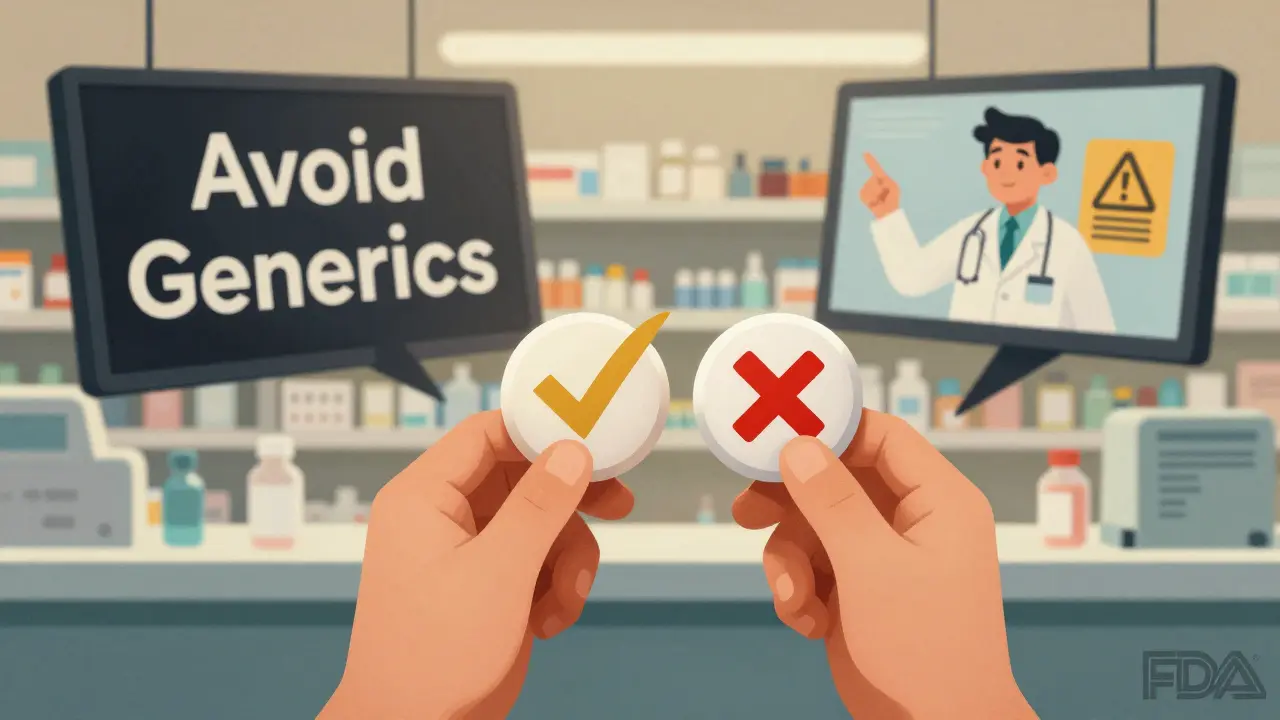
The FDA doesn’t just send warning letters. They’re now issuing cease-and-desist orders. In September 2025 alone, they sent out 100 of them-mostly targeting ads that falsely claimed brand-name drugs were safer or more effective.One case involved a company that ran a TV ad showing a patient holding a brand-name pill with a green checkmark, then a generic with a red X. The ad said: "Ask your doctor for the original." The FDA called it "deceptive and misleading." The company had to pull the ad, pay $1.2 million in fines, and run a corrective campaign.
But the real teeth come from competitors. Under the Lanham Act, one generic manufacturer can sue another for false advertising. In 2025, a smaller generic maker sued a major one for claiming their drug had "superior bioavailability." The court ordered $15 million in damages. The plaintiff didn’t need to prove harm to patients. They just had to show consumer confusion hurt their sales.
What You Should Do If You’re Affected
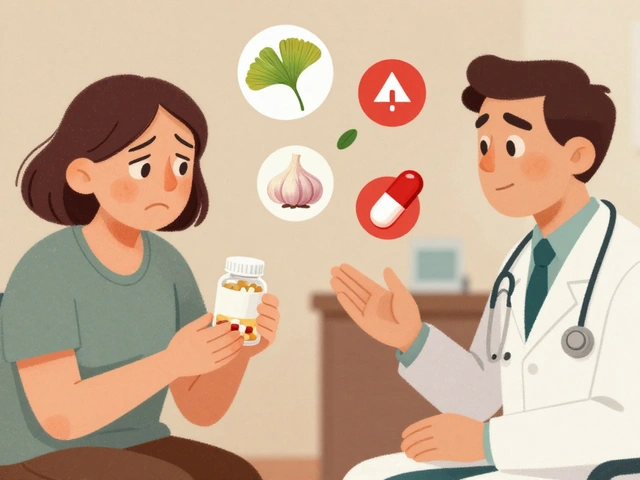
If you’re a patient and you stopped taking a generic because of an ad:- Call your doctor. Don’t assume the ad was right.
- Check the FDA’s website for the official drug info. Look for the "Drug Approvals and Databases" section.
- If you think you were misled, report it to the FDA’s MedWatch program. They track these reports.
If you’re a pharmacist or provider:
- Keep printed FDA fact sheets on hand. Patients ask questions. Be ready with facts.
- Use the FDA’s "Generic Drug Facts" tool. It’s free and updated monthly.
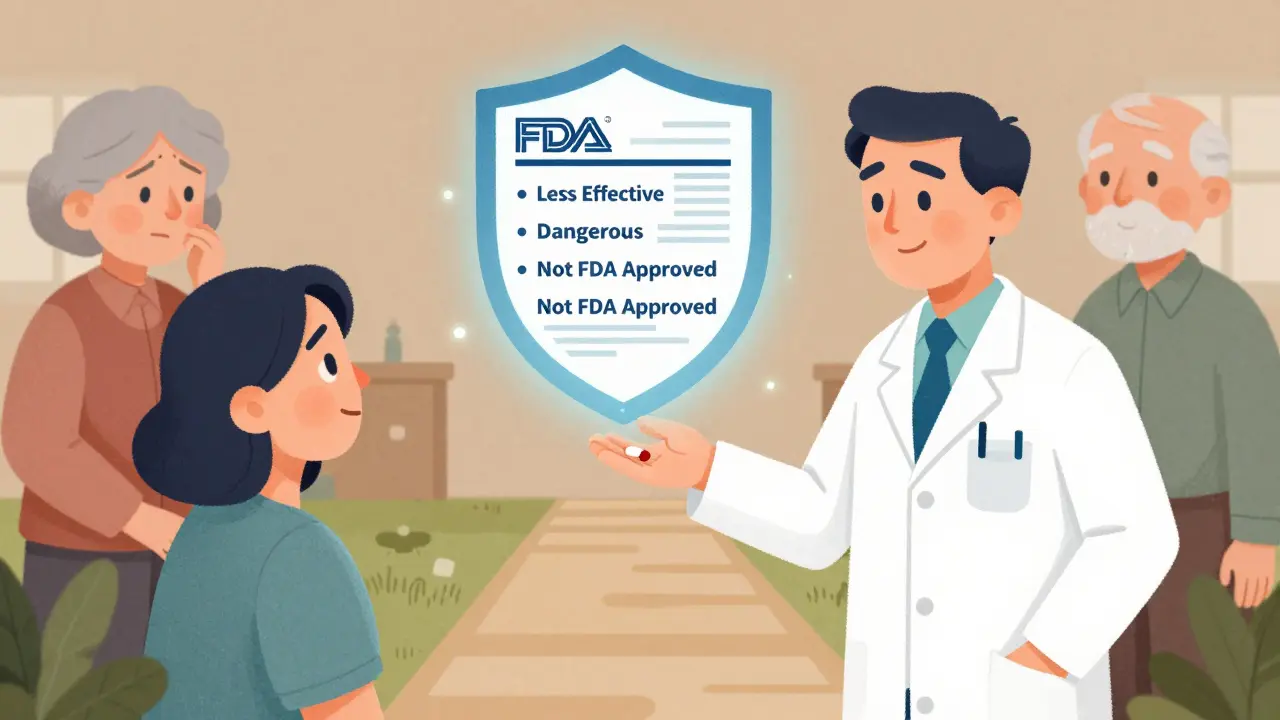
- Warn patients about ads that say "avoid generics" or "use the brand only." Those are red flags.
The Future of Generic Drug Advertising
The rules are tightening. The FDA and FTC are working together on new guidelines. Draft legislation called H.R. 4582, the "Transparency in Drug Advertising Act," would force all ads-TV, online, radio-to include the same risk disclosures. No more loopholes.By 2027, enforcement actions are expected to rise 35% annually. Smaller generic companies that cut corners will struggle. Those with strong compliance systems-like Pfizer’s $45 million review program-will thrive.
The goal isn’t to silence generics. It’s to make sure the message is honest. Generics save lives and money. But only if people trust them. And trust doesn’t come from fear. It comes from truth.
Can a generic drug be less effective than the brand-name version?
No. By law, a generic drug must be bioequivalent to the brand-name version. That means it delivers the same amount of active ingredient into your bloodstream at the same rate. The FDA requires testing to prove this before approval. If a generic fails, it doesn’t get approved. Some patients report feeling different on a generic-but that’s usually because of inactive ingredients (like fillers), not the active drug. The FDA considers those differences acceptable as long as they don’t affect safety or effectiveness.
What’s the difference between "FDA Approved" and "FDA Cleared" for generics?
There’s no such thing as "FDA Cleared" for drugs. That term is used for medical devices. All generic drugs go through the Abbreviated New Drug Application (ANDA) process and are "approved" by the FDA. If an ad says "FDA Cleared," it’s either wrong or intentionally misleading. Using that phrase can trigger legal action under the Lanham Act or FD&C Act.
Can I sue a drug company for false advertising about generics?
As a patient, you can’t sue directly under the Lanham Act-that’s for competitors. But if false advertising caused you harm (like stopping your medication and getting sick), you may have grounds for a personal injury claim. You’d need to prove the ad was false, you relied on it, and it caused you injury. The FDA’s warning letters and court cases against companies are strong evidence in those claims.
Why do some ads say "brand-name quality" for generics?
It’s legal if it’s true. The FDA allows phrases like "same active ingredient" or "same as brand-name" if they’re accurate. But "brand-name quality" is vague. It could imply better manufacturing, better safety, or better effectiveness. That’s a red flag. If the ad doesn’t specify what "quality" means, it’s likely meant to mislead. The FTC and FDA both warn against vague claims that create false impressions.
Are there any generics that shouldn’t be substituted?
Yes. For drugs with a narrow therapeutic index-like levothyroxine, warfarin, or phenytoin-small changes in blood levels can cause serious side effects. The FDA doesn’t ban substitution, but they require special labeling. Doctors must authorize generic switches for these drugs. Ads that suggest generics are unsafe for these drugs are illegal. Patients should never stop taking them based on an ad. Always talk to your doctor first.

15 Comments
William Minks March 5, 2026
I’ve been on generic levothyroxine for 8 years. Never had an issue. Then I saw one of those scary ads and panicked. Went back to brand. Cost me $200/month. Turns out my TSH was identical. I’m so mad at myself. 😣
Susan Purney Mark March 6, 2026
As a pharmacist, I see this every day. Patients walk in terrified because an ad said generics are 'unreliable.' I show them the FDA bioequivalence data. They cry. Then they hug me. 🤍 It’s heartbreaking. And totally preventable.
Amina Aminkhuslen March 7, 2026
These ads aren’t just misleading-they’re criminal. Someone’s making bank off elderly folks’ fears. It’s not capitalism. It’s predation. And the FDA? They’re late to the party. Again. 🤬
Roland Silber March 7, 2026
Let’s be real: bioequivalence doesn’t mean identical. Inactive ingredients vary. Some people *do* react differently. Not because generics are bad-but because human biology is messy. The problem isn’t the drug. It’s the oversimplified narrative. We need nuance, not fear.
Patrick Jackson March 8, 2026
I used to think generics were just cheap knockoffs. Then my dad had a stroke because he stopped his blood pressure med after a scary ad. He didn’t know the generic was the same. He trusted the TV. And now? He’s in rehab. I’m not just angry. I’m haunted. 💔
Bridget Verwey March 8, 2026
So let me get this straight. Companies can run ads that scare people out of life-saving meds… but if you say 'brand-name quality' on a generic, you get fined? Who decided this was a fair system? 🤷♀️
Andrew Poulin March 10, 2026
Stop the fearmongering. Generics save lives. Ads that say otherwise are fraud. End of story. The FDA should shut them down before they air. Not after someone ends up in the ER.
Weston Potgieter March 12, 2026
I read this whole thing. Boring. Just let people choose. If they wanna pay extra for a pill with a pretty logo, fine. Don’t ruin it for the rest of us.
Ferdinand Aton March 13, 2026
Wait… so if a generic is chemically identical, why do some people feel worse on it? Maybe the system is broken. Maybe the brand isn’t better… but the placebo effect is real. Just saying.
Jeff Mirisola March 13, 2026
We can fix this. Public education. Simple infographics. Pharmacies handing out one-pagers. No jargon. Just: 'Same drug. Same effect. Half the price.' We’ve got the tools. We just need to use them.
Vikas Verma March 15, 2026
In India, generic substitution is standard. No regulatory panic. No fear campaigns. Why? Because trust is built through consistent access and transparent supply chains. Not litigation. Not ads. The US system is overcomplicated and profit-driven.
Sean Callahan March 17, 2026
i read this and i just cried. my mom died because she stopped her generic heart med after an ad. i hate these companies. they know what theyre doing. theyre not stupid. theyre evil. 🖤
Ian Kiplagat March 18, 2026
The UK has similar rules. No scary ads. No 'superior' claims. Just facts. And people trust generics. Maybe we need to stop treating patients like idiots and start treating them like adults.
amber carrillo March 20, 2026
I work in healthcare policy. This is why we need mandatory disclaimers on all drug ads: 'This drug is bioequivalent to [brand name]. No clinical difference proven.' Just one line. Could save lives.
Tim Hnatko March 21, 2026
I’ve been in pharma compliance for 15 years. The real problem? Small companies can’t afford legal teams. So they cut corners. The big ones? They play the game. The system rewards the rich. The rest of us pay with our health.