
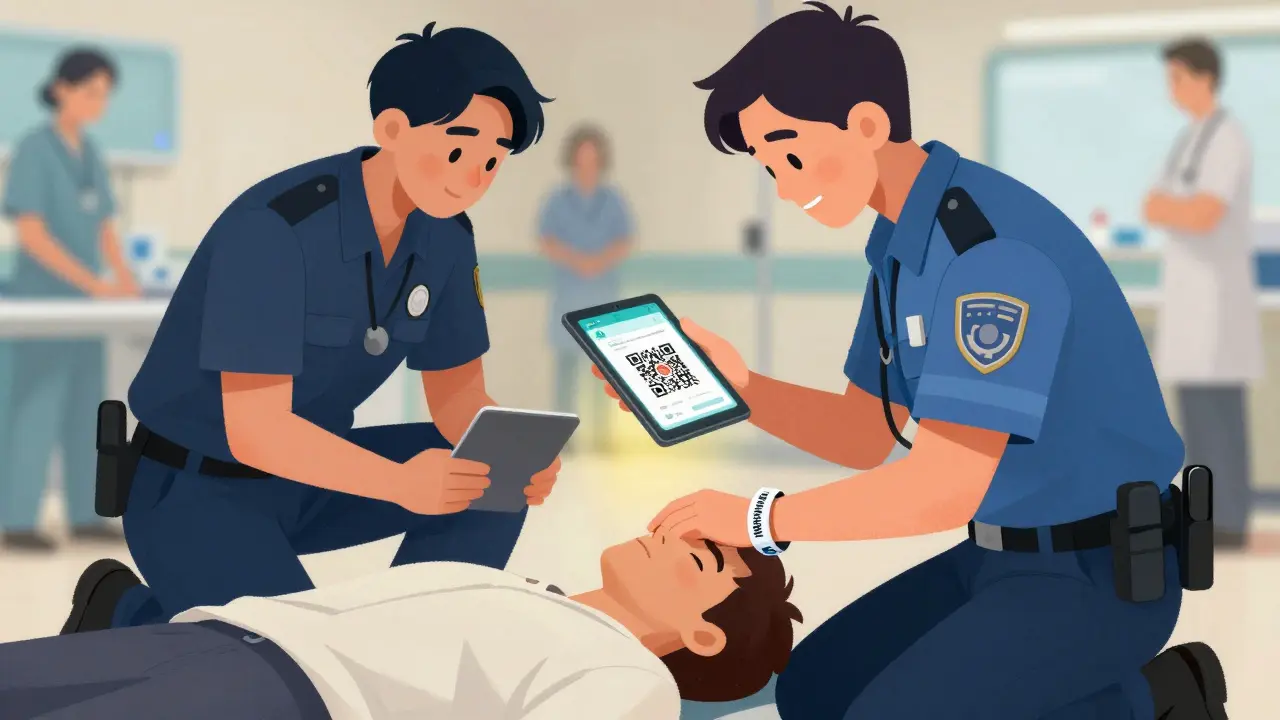
Medical Alert Bracelet Checklist
Check Your Emergency Readiness
This tool evaluates if your medical alert bracelet contains the critical information needed during emergencies.
Emergency Readiness Assessment
Recommended Actions:
QR vs Traditional Bracelets
QR Code Bracelets: Automatically updates with your pharmacy records. Includes full medication history, doctor contacts, and allergy details. Requires annual fee ($59.99).
Traditional Bracelets: Permanent engraving but can't be updated. Limited to 3-5 lines of text. Starting at $49.99.
Every year, thousands of people end up in emergency rooms because something went wrong with their medication. Maybe they took the wrong pill. Maybe they had an allergic reaction. Maybe they were unconscious and couldn’t tell the doctors what they were on. In those critical minutes, a simple piece of jewelry on the wrist can mean the difference between life and death. That’s what a medical alert bracelet does-it speaks for you when you can’t.
Why Your Medication Info Needs to Be Visible
Emergency responders don’t have time to guess. When someone collapses, paramedics and ER staff follow a strict protocol: check the neck, check the wrists. That’s where they look for medical IDs. According to the American College of Emergency Physicians, over 89% of first responders correctly use the information on these bracelets when they find them. And it’s not just a nice-to-have. A 2022 study in the Journal of Emergency Medicine found that nearly 37% of ER errors involve medications. That’s almost four in ten cases where the wrong drug, dose, or treatment was given because the patient’s history wasn’t clear.Think about this: if you’re on warfarin, a blood thinner used to prevent clots, and you get into a car accident, giving you a clot-busting drug could cause you to bleed internally. But if your bracelet says “ON BLOOD THINNERS - WARFARIN,” the team knows to avoid certain treatments and choose safer ones. The CDC reports that 2.9 million Americans take warfarin. If even half of them wore a bracelet with the right info, thousands of dangerous mistakes could be avoided each year.
What to Put on Your Bracelet (And What to Skip)
Not all information is created equal. There’s limited space on a traditional metal bracelet-usually just 3 to 5 lines. So what matters most? The experts agree on this order:- Drug allergies - Especially penicillin (affects 10% of U.S. adults), latex, NSAIDs like aspirin or ibuprofen, and sedatives. One Reddit user, AllergicAmy, shared how her bracelet saved her life during an appendectomy. The ER team was about to give her penicillin until they saw “ANAPHYLACTIC TO PENICILLIN” engraved on her wrist. She says, “They told me I’d have died in minutes.”
- Critical medications - Blood thinners (warfarin, rivaroxaban), insulin (for diabetics), and seizure meds. For diabetics, it’s not enough to say “diabetic.” You need to specify “TYPE 1 INSULIN DEPENDENT” or “TYPE 2 ON GLIMEPIRIDE.” The difference changes how they treat low blood sugar.
- Chronic conditions - Heart disease, kidney failure, or epilepsy. These help responders understand your baseline health.
Don’t waste space on things like “asthma” or “high blood pressure” unless they directly affect emergency care. A 2023 survey by the ID Band Company found that 68% of buyers prioritize medication info, and 42% of those specifically list blood thinners. That’s the gold standard.
Traditional vs. QR Code Bracelets: Which One Works Better?
Traditional engraved bracelets are durable and always work-even without battery or signal. But they’re limited. One user told Consumer Reports: “My bracelet only said ‘ON BLOOD THINNERS’-but not which one. They still ran extra tests.” That’s the problem: vague info delays care.That’s why QR code bracelets are gaining ground. Since 2018, companies like MedicAlert Foundation have offered digital profiles linked to a scannable code. When scanned, it pulls up your full medication list, dosages, allergies, doctor contacts, and even your pharmacy details. As of 2023, over 4 million people use these systems. And the update feature? Game-changer. In January 2024, MedicAlert launched SmartProfile, which syncs with pharmacy records. If your doctor changes your meds, the bracelet info updates automatically. No more forgetting.
Price-wise, traditional bracelets start at $49.99. QR code versions start at $69.99, but come with a $59.99 annual fee to keep your profile active. For people on multiple medications, the cost is worth it. A 2023 MobileHelp study found 142 cases where QR bracelets prevented fatal drug interactions-mostly from blood thinners clashing with emergency treatments.
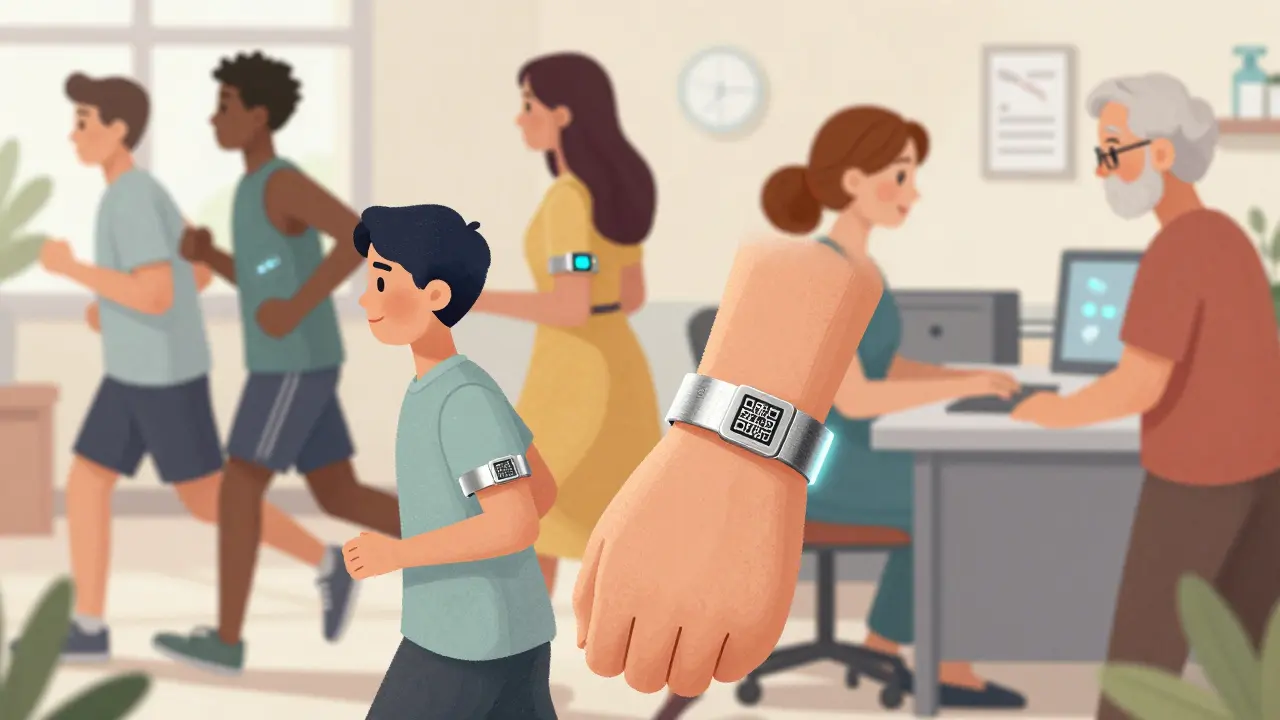
The Hidden Danger: Outdated Info
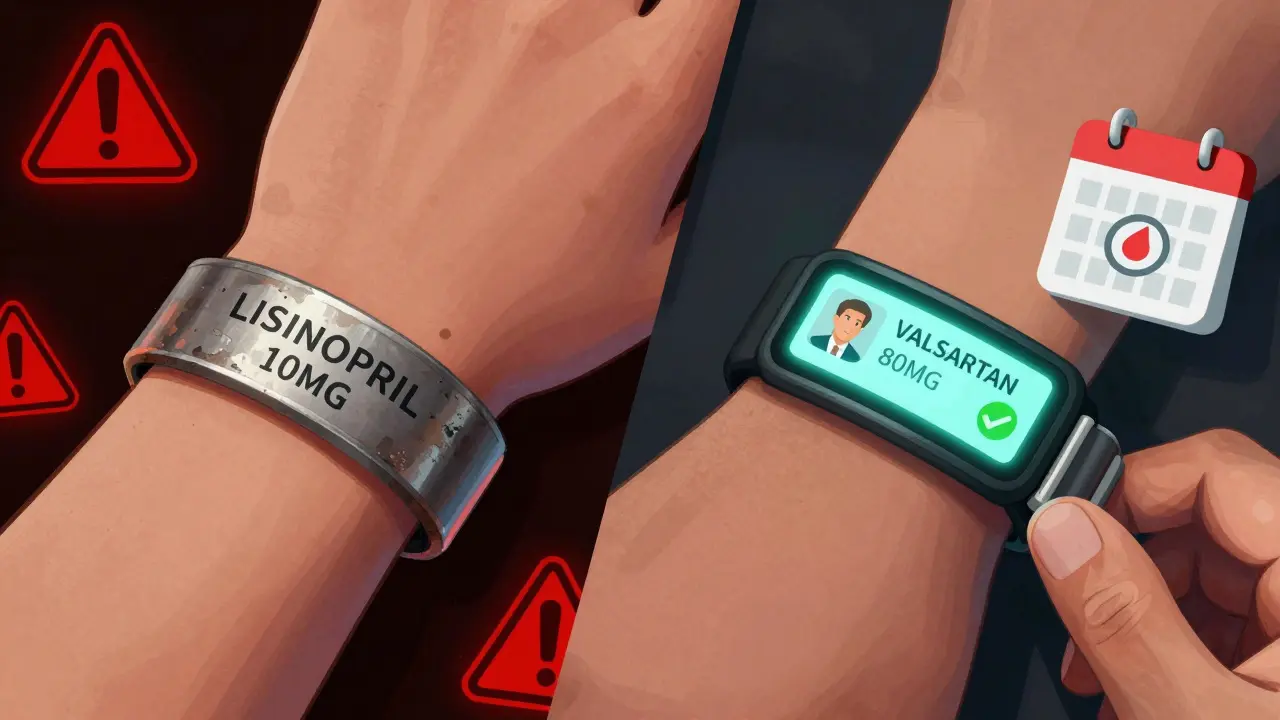
Here’s the scary part: 35% of people never update their bracelets after a medication change, according to the American Pharmacists Association. That means your bracelet might say “Lisinopril 10mg” when you’ve been switched to “Valsartan 80mg.” In an emergency, that’s not just useless-it’s dangerous.Dr. Sarah Thompson from Johns Hopkins reviewed 500 emergency cases and found that 19% of bracelets had outdated or incomplete info. That’s nearly one in five. The fix? Set a calendar reminder. Every time your prescription changes, update your bracelet within 48 hours. If you use a digital system like SmartProfile, you’ll get automated alerts when your pharmacy updates your record. No more guesswork.
Who Needs It Most?
You don’t have to be elderly to need one. The National Health Interview Survey (2024) shows who’s most at risk:- 41% of warfarin users wear one
- 33% of people with severe allergies
- 28% of diabetics
But it’s not just about those groups. If you take three or more medications daily, have a history of allergic reactions, or are on any drug that affects bleeding, clotting, or brain function, you’re a candidate. Even if you’re healthy now, future surgeries, accidents, or sudden illnesses can change everything. A bracelet costs less than a monthly coffee habit. The peace of mind? Priceless.
How to Make Sure It Works When It Counts
A bracelet is useless if no one sees it or knows how to read it. Here’s how to make sure yours does its job:- Wear it every day. The National Council on Aging found 73% of emergencies happen when people are away from home. You never know when you’ll need it.
- Choose clear, uppercase text. First responders scan fast. Fancy fonts or lowercase letters get missed.
- Include NDC codes if possible. Starting in March 2024, ACEP recommends adding National Drug Codes (like 00026-1175-01) for exact drug identification, especially for generics.
- Pair it with a personal alarm. Medical Guardian’s 2025 system combines a bracelet with a fall-detection alert. In emergencies, it calls for help AND informs responders. The NCOA says this combo improves outcomes by 41% for drug-related incidents.
The Bigger Picture: Where This Is All Headed
The medical ID market hit $287 million in 2023 and is expected to grow over 6% annually through 2030. Hospitals are catching on: 67% now have formal procedures to check for medical IDs during intake. The FDA is pushing for standardized formatting. Epic and Cerner-the two biggest electronic health record systems-are building direct links between hospital records and digital medical IDs. That means, in the near future, your bracelet won’t just show your meds-it’ll show real-time data from your doctor’s office.Still, there’s a gap. The Institute for Safe Medication Practices says only 14% of EMTs get specific training on reading complex medication info from IDs. That’s why education matters-not just for wearers, but for first responders too. Until that changes, your bracelet remains your most reliable lifeline.
It’s not magic. It’s not high-tech. It’s just a piece of metal or plastic with your life-saving info on it. But in those first few minutes when seconds count, it’s the only voice you’ve got. Don’t wait until it’s too late to speak.
Do medical alert bracelets really work in emergencies?
Yes. According to the American College of Emergency Physicians, first responders are trained to check wrists and necks for medical IDs during every emergency. Studies show that when a bracelet is present, responders use its information correctly in 89% of cases. In one 2023 study, 142 life-threatening drug interactions were prevented because of medical alert bracelets.
What if my medication changes? Do I need a new bracelet?
If you have a traditional engraved bracelet, you’ll need to replace it to reflect changes. But if you use a QR code system like MedicAlert’s SmartProfile, your digital profile updates automatically when your pharmacy or doctor changes your meds. You keep the same bracelet-just scan it to see the latest info. That’s why digital options are becoming the standard for drug safety.
Can I wear a medical alert bracelet if I’m young and healthy?
Absolutely. You don’t have to be elderly or chronically ill to benefit. If you take three or more medications, have allergies, or are on blood thinners, insulin, or seizure meds, you’re at risk for medication errors-even if you feel fine. Accidents happen. Emergencies don’t care how old you are. A bracelet is like a seatbelt: you don’t need it until you do.
Are QR code bracelets safe and private?
Yes. Reputable providers like MedicAlert Foundation use encrypted, password-protected profiles. Emergency responders scan the code with a phone or tablet-no login needed. The system only shows critical info: allergies, meds, conditions. No personal data like your address or Social Security number is stored. You control what’s included, and you can update it anytime.
What if I forget to wear my bracelet?
That’s the biggest risk. Studies show 73% of emergencies happen when people are away from home-on walks, at work, traveling. The only way to be protected is to wear it every day. Set a daily reminder on your phone: “Wear bracelet.” Make it part of your routine, like brushing your teeth. If you’re worried about forgetting, choose a style you like-something you’d wear even if you weren’t sick.




10 Comments
Buddy Nataatmadja March 15, 2026
Been wearing my medical bracelet for 8 years now. Never thought it’d matter until my buddy passed out at a concert and the EMTs read it before even asking him a question. Saved him from a bad interaction between his antihypertensive and some random painkiller they almost gave him. Just metal, yeah-but it’s like a silent bodyguard.
Wear it. Even if you think you’re fine. You never know when your body decides to throw a tantrum.
mir yasir March 16, 2026
One must question the empirical validity of the claims presented herein. While anecdotal evidence abounds, the statistical underpinnings of the 89% efficacy rate cited lack peer-reviewed corroboration. Moreover, the assertion that QR-code bracelets are ‘game-changing’ is a marketing construct, not a clinical breakthrough. One ought to consider the potential for data breaches, obsolescence of scanning infrastructure, and the inherent fragility of digital systems in high-stress, low-resource environments. The traditional engraved band remains, by all rational measures, the superior instrument.
Stephanie Paluch March 17, 2026
OMG YES I’M SO GLAD THIS POST EXISTS 😭
I got mine after my anaphylaxis scare last year-turns out I’m allergic to sulfa and I had NO IDEA. My bracelet says ‘ANAPHYLAXIC TO SULFA’ and I wear it every single day like it’s my lucky charm. My mom even cried when I told her the ER doc said it saved me.
Also-QR ones are magic. My pharmacy updates it automatically now. I don’t have to think about it. I just… wear it. And now I’m trying to convince my whole family to get one. 💙
tynece roberts March 17, 2026
so i got one of those qr bracelets last year bc my doc said i should and honestly i forgot i even had it until last month when i went to the er for a bad migraine and they scanned it and were like ohhh you’re on warfarin we cant give you that pain med
and i was like oh right yeah i am
and then i went home and cried bc i almost died and i didnt even realize how close i was
now i wear it every day even to bed and i got a new one with a little flower on it bc i like it
also i still forget to update it sometimes but the app reminds me so its kinda ok
if you take more than 2 meds just do it. its cheaper than your monthly netflix
Hugh Breen March 18, 2026
THIS. THIS. THIS.
I’m a paramedic in London and I’ve seen it firsthand. I had a guy collapse at a bus stop last winter-no ID, no wallet, no phone. We had to guess. He almost died from a warfarin overdose because we gave him a NSAID thinking it was a simple sprain.
Then two weeks later? Another guy. Same scene. But he had a QR bracelet. We scanned it. His med list popped up. We changed course. He went home. No ICU.
It’s not a luxury. It’s a lifeline. And if you’re not wearing one? You’re gambling with your life. And frankly? That’s not just irresponsible. It’s selfish. We’re out here trying to save you. Help us help you.
❤️❤️❤️
Byron Boror March 19, 2026
Why are we letting private companies profit off of lifesaving tech? This should be mandated by the government. Free medical IDs for every citizen. Why are we letting MedicAlert and others charge $70 a year? This isn’t a subscription service-it’s public health. We’re in a crisis. Why are we letting corporations monetize survival?
Lorna Brown March 20, 2026
There’s something deeply human about this. We’re not just talking about data or devices. We’re talking about the moment when you’re most vulnerable-unconscious, afraid, unable to speak-and you’re still heard. The bracelet doesn’t ask for your permission. It doesn’t judge your choices. It just speaks. And in a world that’s increasingly abstract, digital, and alienating, that’s profound.
It’s not about medicine. It’s about dignity. And dignity shouldn’t be optional.
Rex Regum March 20, 2026
Wow. So now we’re supposed to wear a digital ID bracelet like some kind of surveillance chip? Next they’ll be implanting microchips under our skin. This is how authoritarian systems start. You think you’re being safe? You’re being tracked. The FDA? The CDC? They’re not your friends. They’re the ones who pushed masks, vaccines, and now this. Wake up. You’re being manipulated into surrendering your autonomy for a false sense of security.
Kelsey Vonk March 21, 2026
I just got my QR bracelet last week. I’m on four meds and have a rare heart condition. I didn’t realize how much anxiety I carried until I stopped worrying about forgetting what I was on.
My doctor said she’s seen too many patients with outdated info on old bracelets. I cried. Not because I was scared, but because I realized how much I’d been holding my breath, waiting for something to go wrong.
Thank you for writing this. I feel less alone now.
Emma Nicolls March 22, 2026
so i got mine for my birthday last year and i wear it every day even if i’m just running to the store
my sister said i look like a superhero now and i kinda do lol
also i got a little charm that says ‘love u’ so if i ever pass out someone sees it and knows i’m loved
and if you’re hesitating just get the basic one and wear it for a month
you’ll be glad you did
ps i still forget to update it sometimes but my phone pings me so its fine 😊