
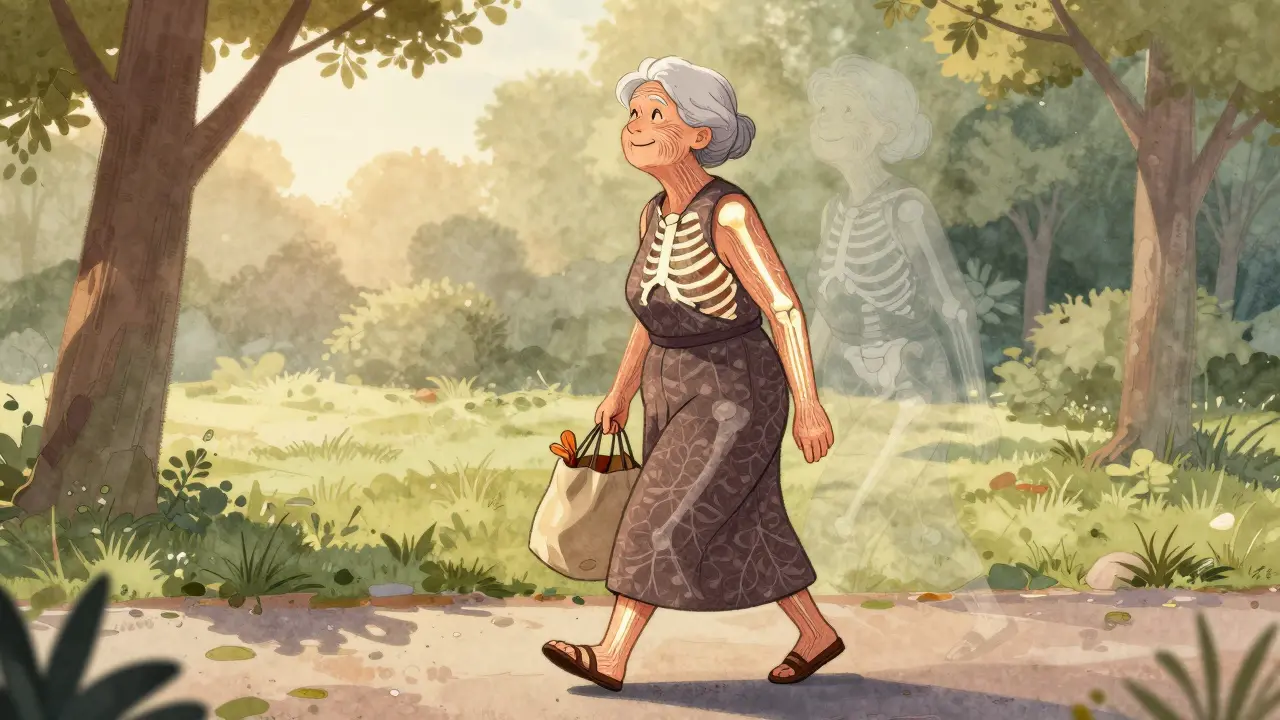
Why Your Bones Are Weakening Without You Realizing It
You might not feel it now, but your bones are slowly losing strength. Osteoporosis doesn’t come with pain or warning signs until you fall-and then it’s too late. One in three women over 50 and one in five men will break a bone because their bones have become fragile. That’s not just aging. It’s preventable. Most people don’t know their bone density is dropping until they suffer a fracture from a simple trip or stumble. By then, the damage is done. The good news? You can stop it. You can even rebuild some of what’s been lost.
What Happens When Bone Density Drops
Your bones aren’t static. They’re alive, constantly breaking down and rebuilding. Until about age 30, you build more than you lose. After that, the balance shifts. For women, things speed up after menopause-bone loss can hit 2-3% a year for the first five to seven years. Men lose bone too, but slower. When this process goes unchecked, the inside of your bones becomes porous, like a sponge with big holes. That’s osteoporosis. It doesn’t show up on X-rays until it’s advanced. The only way to know for sure is a DXA scan, which measures bone density using less radiation than a flight from London to Birmingham.
The Real Risk Factors You Can’t Change
Some things you can’t control. Age is one. After 65, your fracture risk jumps more than fourfold. Being female? You’re four times more likely to get osteoporosis than men. Race matters too-White and Asian women have higher risk than Black or Hispanic women. Family history? If your mom or dad broke a hip, your risk goes up by 60-80%. Early menopause (before 45) doubles your chances. These aren’t guesses. These are numbers from large, long-term studies tracking hundreds of thousands of people. You can’t change your genes or your gender, but knowing your risks helps you act smarter.
The Risks You Can Actually Fix
This is where you have power. Low calcium? If you’re not getting at least 1,000mg a day (1,200mg if you’re over 50), you’re setting yourself up for trouble. Most people don’t hit that mark through diet alone. Vitamin D deficiency is even more common-42% of U.S. adults have levels below 20ng/mL, which raises fracture risk by a third. Smoking? One pack a day increases your risk by 55%. Drinking more than two units of alcohol a day? That’s a 41% higher chance of a hip fracture. And if you’re sitting most of the day? You’re 25-30% more likely to break a bone. These aren’t just lifestyle suggestions. They’re direct contributors to bone breakdown.
How to Build Stronger Bones-No Pills Needed
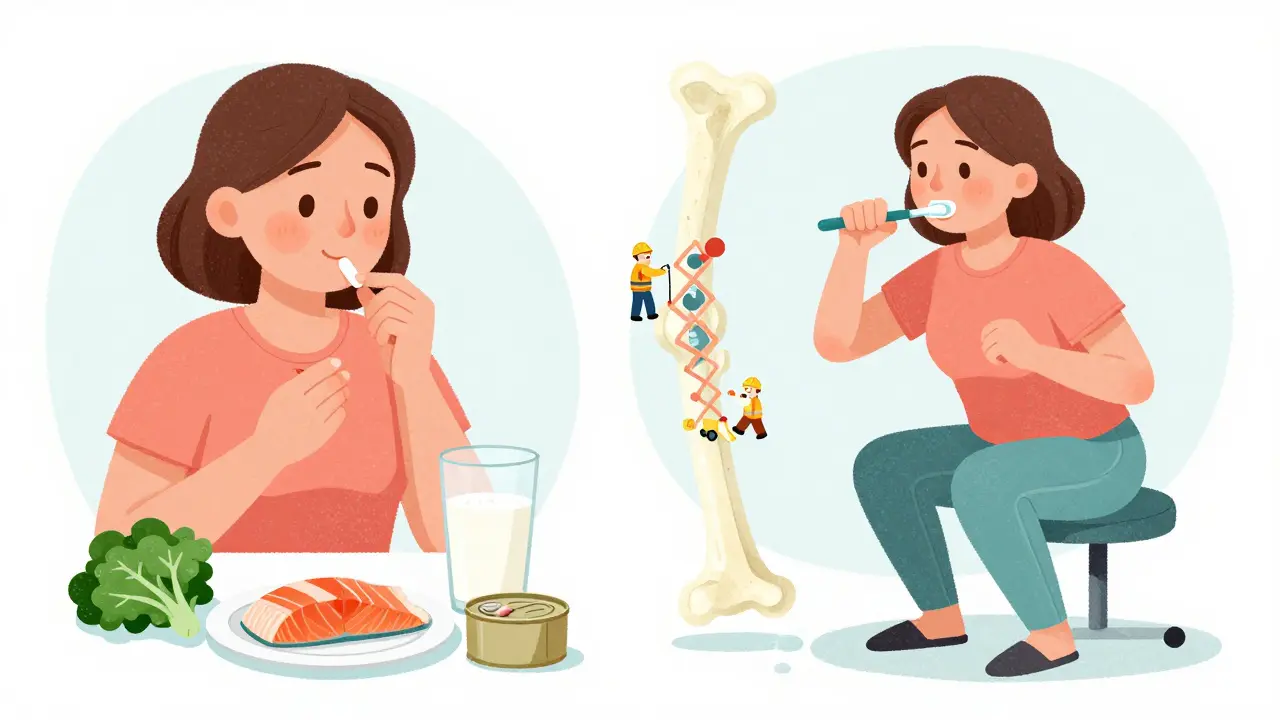
Exercise isn’t just for your heart. It’s your bones’ best friend. Weight-bearing activity-walking fast, climbing stairs, dancing, jogging-tells your body to keep building bone. Resistance training with bands or weights twice a week helps even more. A Yale study of over 2,500 people showed that those who stuck with this routine cut their fracture risk by 30-40%. Balance training matters too. Falls cause 90% of osteoporotic fractures. Tai Chi, yoga, or simple balance drills three times a week can reduce falls by nearly half. You don’t need a gym. A 30-minute walk five days a week, plus lifting groceries or doing squats while brushing your teeth, adds up.
Calcium and Vitamin D: The Real Numbers
Supplements aren’t magic. But getting the right amount makes a difference. You need 1,000-1,200mg of elemental calcium daily. Split it into two doses-500-600mg at a time-because your body can’t absorb more than that at once. Food sources like milk, yogurt, cheese, canned salmon, kale, and fortified cereals help. If you’re not getting enough from food, take a supplement. Vitamin D is just as important. Most people need 800-1,000 IU daily. If your blood level is below 20ng/mL (common in winter), you might need 2,000 IU for a few months to catch up. Don’t guess your levels-ask your doctor for a simple blood test. It’s quick, cheap, and tells you exactly what you need.
Why Medications Aren’t the Only Answer
Drugs like bisphosphonates (alendronate, risedronate) slow bone loss. They work. But 38% of people stop taking them within a year because of stomach upset or joint pain. Romosozumab (Evenity) is newer-it actually builds new bone while slowing breakdown. But it’s expensive and only used for high-risk cases. The truth? Most people don’t need strong meds. If you’re not at high risk, lifestyle changes alone can prevent fractures. The key is consistency. Taking a pill once a week won’t help if you’re still smoking, skipping calcium, or sitting all day. Medications are tools, not fixes.
Fracture History Is the Biggest Warning Sign
Here’s something most people don’t know: if you’ve already broken a bone from a minor fall, your chance of breaking another skyrockets. A spine fracture? Your risk of another one jumps by 86%. A hip fracture? Your risk of a second one goes up by 200%. That’s higher than the risk from low bone density alone. Dr. Ethel Siris, a leading bone specialist, says fracture history is the strongest predictor of future fractures. If you’ve had one, don’t wait for another. Start acting now-exercise, check your vitamin D, remove tripping hazards at home. You’re not just preventing osteoporosis. You’re preventing disability.
What to Do Right Now
- Get a DXA scan if you’re a woman over 65, or a man over 70. If you’re younger but have risk factors (smoking, steroid use, early menopause, family history), ask your doctor.
- Take a daily calcium and vitamin D supplement if you’re not getting enough from food.
- Walk briskly for 30 minutes, five days a week. Add two days of light weights or resistance bands.
- Stop smoking. Cut alcohol to one drink a day or less.
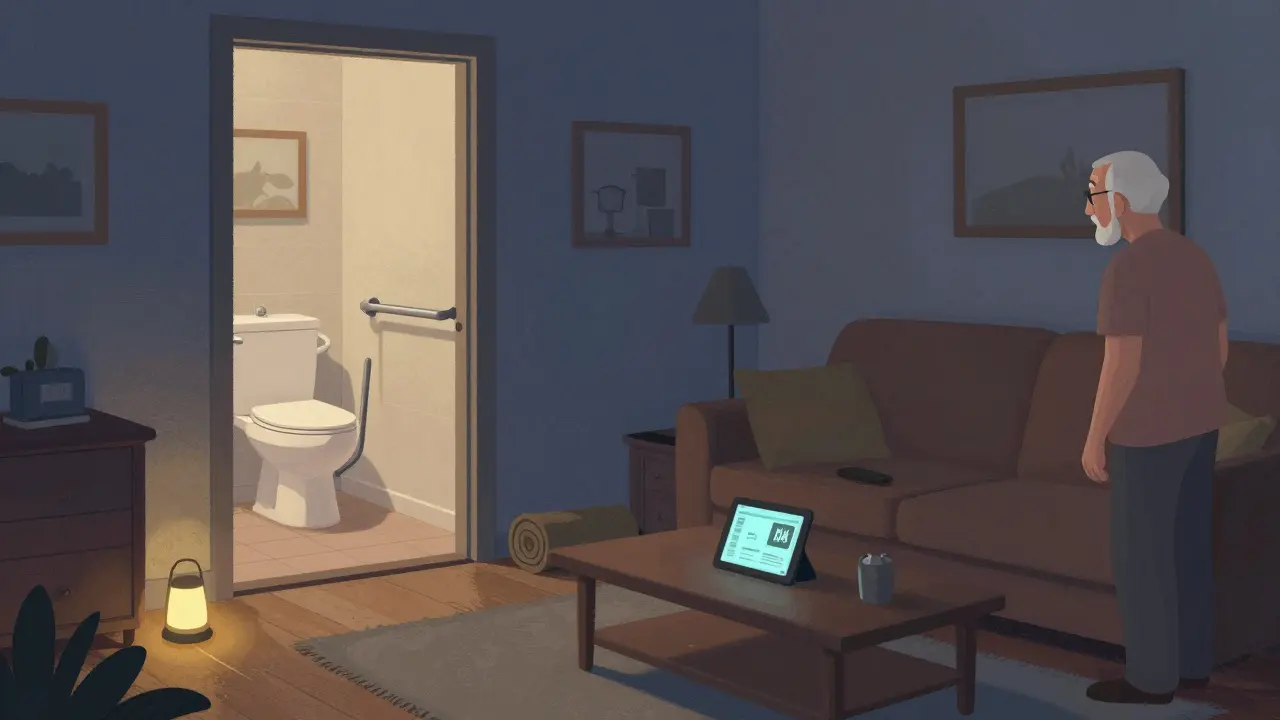
- Check your home for tripping hazards: loose rugs, poor lighting, cluttered stairs. Install grab bars in the bathroom.
- Ask your doctor for a FRAX score-it calculates your 10-year fracture risk using your age, sex, weight, and medical history.
It’s Not Too Late-Even If You’re Already Over 60
Some people think bone loss is irreversible. It’s not. Studies show that even in your 70s, consistent weight-bearing exercise and proper nutrition can improve bone density by 1-3% in a year. That might sound small, but it’s enough to drop your fracture risk by 20-30%. One woman in her late 60s from Birmingham started walking daily and doing chair squats. After a year, her DXA scan showed improved density. She didn’t need medication. She just changed her habits. You can too. Bone health isn’t about being young. It’s about being consistent.
What’s Coming Next
Research is moving fast. New studies show certain probiotics, like Lactobacillus reuteri, might boost bone density by 1.5-2% over a year. The WHO just updated its FRAX tool to include time since menopause and healing problems after fractures, making predictions more accurate. The big picture? By 2050, osteoporosis cases could triple globally. Prevention isn’t optional anymore-it’s urgent. The best time to start protecting your bones was 20 years ago. The second best time is today.
Can osteoporosis be reversed?
You can’t fully restore bone density to what it was at 25, but you can stop further loss and even rebuild some bone. Weight-bearing exercise, adequate calcium and vitamin D, and avoiding smoking and excess alcohol can improve bone density by 1-3% in a year-even in your 70s. Medications like romosozumab can help rebuild bone faster, but lifestyle changes are the foundation for everyone.
Do I need a bone density scan?
If you’re a woman over 65 or a man over 70, yes. If you’re younger but have risk factors-like a family history of hip fracture, early menopause, long-term steroid use, or a previous fracture-you should get tested too. The scan takes 15-20 minutes, uses almost no radiation, and tells you your exact bone strength. Don’t wait for a fracture to happen before you check.
Is walking enough to prevent fractures?
Walking helps, but it’s not enough on its own. You need weight-bearing activity (walking, stair climbing, dancing) plus resistance training (light weights, resistance bands, bodyweight exercises like squats). Studies show that combining both cuts fracture risk by 30-40%. Walking improves balance and keeps you moving, but lifting something-your body or a dumbbell-tells your bones to get stronger.
Can I get enough calcium from food alone?
It’s hard. One cup of milk has 300mg. A serving of yogurt has 200-300mg. A cup of cooked kale has 180mg. To hit 1,000-1,200mg daily, you’d need to eat dairy or fortified foods at every meal. Most people don’t. That’s why supplements are often necessary. If you’re lactose intolerant or vegan, look for calcium-fortified plant milks, tofu, almonds, and leafy greens. But even then, you’ll likely need a supplement to reach the target.
How do I know if I’m getting enough vitamin D?
The only way to know is a blood test. Levels below 20ng/mL mean you’re deficient. In the UK, most people are low in winter. Taking 800-1,000 IU daily is safe for most adults. If your level is below 20, your doctor might recommend 2,000 IU for 3-4 months. Sunlight helps, but in northern climates like Birmingham, you can’t get enough from the sun for half the year. Don’t rely on it alone.
What’s the best way to prevent falls at home?
Start with the basics: remove loose rugs, install grab bars in the bathroom, add nightlights in hallways and near the bed, and keep floors clear. Wear shoes with non-slip soles-even indoors. Have your vision checked yearly. Many falls happen because people can’t see obstacles. Balance exercises like standing on one foot while brushing your teeth can improve stability. A simple home safety checklist from the CDC can guide you through the most common hazards.
Do men get osteoporosis?
Yes. One in five men over 50 will have an osteoporotic fracture. Men don’t lose bone as fast as women after menopause, but they still lose it. Risk factors for men include low testosterone, long-term steroid use, smoking, heavy drinking, and lack of exercise. Many men don’t get tested because they think it’s a "woman’s disease." It’s not. If you’re over 70, or over 50 with risk factors, ask for a bone density scan.


12 Comments
Coy Huffman February 3, 2026
man i just learned i’ve been doing half of this wrong. i thought walking was enough. turns out i need to start lifting my groceries like they’re dumbbells 🤦♂️
Amit Jain February 4, 2026
simple truth: if you’re not moving, your bones are dying. walk more, eat dairy or fortified stuff, stop smoking. no magic pills needed. just do it.
Keith Harris February 4, 2026
lol this whole post is fear-mongering with a side of corporate supplement ads. you think a 50-year-old man in Ohio is gonna start doing squats while brushing his teeth? nah. he’s gonna take his bisphosphonate, watch Netflix, and die with his bones intact. it’s called evolution, not osteoporosis.
Kunal Kaushik February 4, 2026
i’m 62 and started walking daily after my uncle broke his hip. didn’t think it’d do anything. now my doc says my density’s up 2%. small wins, man. small wins.
Mandy Vodak-Marotta February 5, 2026
okay but like… i’m a woman over 50 and i’ve been reading this whole thing and i just want to cry because i’ve been ignoring this for years and now i feel so guilty but also kinda empowered? like i can actually do something? i’m gonna start with the walking and then maybe the weights and then maybe i’ll finally stop wearing slippers indoors?? 😅
Nathan King February 6, 2026
While the general sentiment of the article is commendable, the conflation of lifestyle modification with clinical intervention lacks sufficient nuance. The efficacy of non-pharmacological approaches is contingent upon baseline health status, genetic predisposition, and metabolic efficiency-factors not uniformly addressed in the presented recommendations.
Harriot Rockey February 8, 2026
you’re not too old. you’re not too late. i’m 71 and i do chair squats while watching tv. my bones are thanking me. you can too. 💪❤️
rahulkumar maurya February 8, 2026
let’s be real-most people reading this won’t change a thing. they’ll scroll past, eat their pizza, and blame ‘genetics’ while their spine collapses. bone density scans are expensive, and most can’t afford to care. this is a privilege issue disguised as health advice.
Alec Stewart Stewart February 10, 2026
i used to think osteoporosis was just for grandmas. then my dad broke his wrist reaching for a jar. he’s 68, never smoked, drinks once a month. turns out, sitting all day at a desk for 40 years is the real enemy. started doing wall push-ups. it’s dumb. it works.
Demetria Morris February 11, 2026
if you’re not taking your vitamin D and calcium supplements every single day without fail, you’re just delaying the inevitable. no one wants to hear this, but your laziness is going to cost you your independence. stop making excuses.
Geri Rogers February 12, 2026
i’m a nurse. i’ve seen too many elderly people in the ER after a fall. one lady broke her hip, got a hip replacement, then fell again six months later and died from complications. it’s not ‘just aging’. it’s preventable. start walking. start lifting. start caring. your future self will hug you for it. 🤗
Roshan Gudhe February 14, 2026
I’ve been thinking about this a lot. We talk about bones like they’re just scaffolding, but they’re alive. They remember. They respond. They heal. When we move, we speak to them. When we sit, we silence them. When we feed them calcium, we say ‘I’m here for you.’ When we smoke, we whisper ‘I don’t care.’ Your bones aren’t passive. They’re listening. And they’ve been waiting for you to start talking back.