
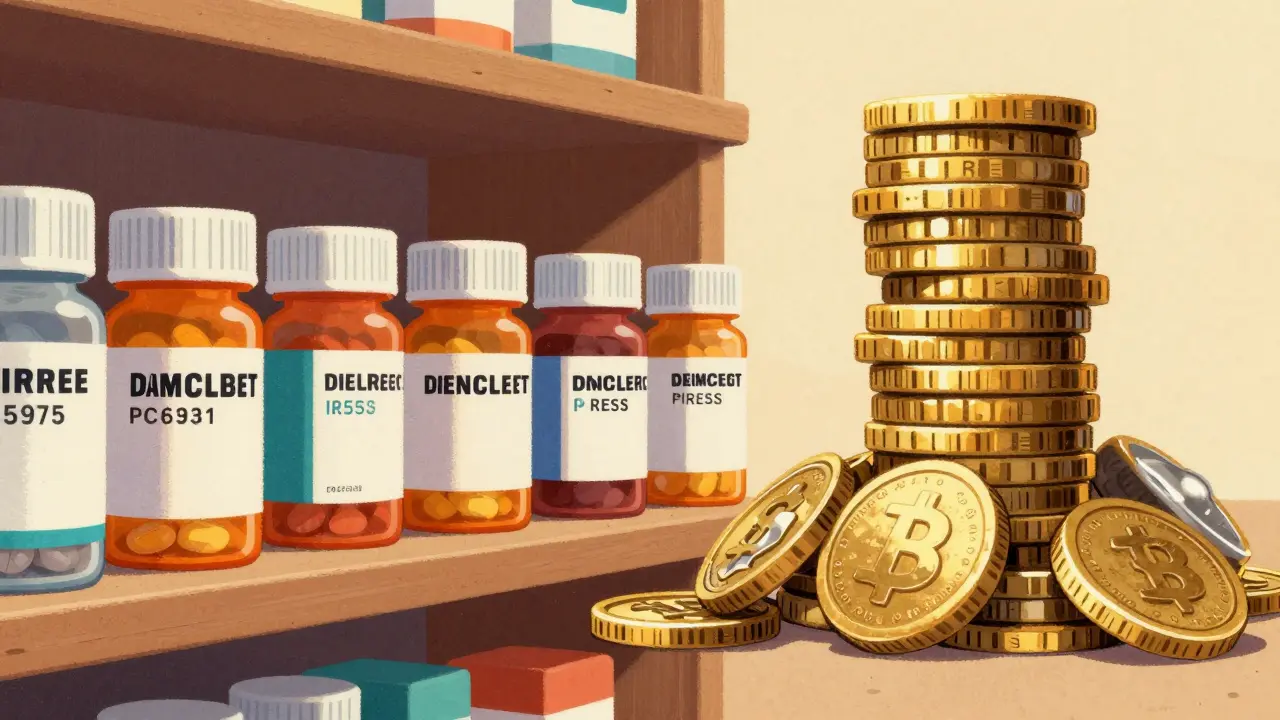
Understanding the True Price of Generic Approvals
Generic Drugs are medications that contain the same active ingredients as brand-name drugs but are sold after patent expiration. They represent the backbone of affordable healthcare, accounting for 90% of prescriptions filled in the U.S. While patients benefit from lower prices, the path to approval involves significant regulatory costs that shape the market landscape.
We need to talk about the money behind the medicine. When you see a cheaper version of a popular drug on the shelf, there was a massive upfront investment to get it there. It isn't just lab work; it is a rigorous regulatory battle. In 2025 alone, generics generated $467 billion in healthcare savings according to the Association for Accessible Medicines (AAM). However, getting that product to market under the Food and Drug Administration (FDA) oversight requires navigating a complex web of fees known as GDUFA. For anyone trying to understand why some generics take years to appear despite patent cliffs having passed, understanding these costs is the missing puzzle piece.
The GDUFA Fee Structure Explained
The engine driving this regulatory framework is the Generic Drug User Fee Amendments (GDUFA). Established in 2012 and currently under its third iteration, GDUFA III, this system essentially taxes companies to fund the FDA's review staff. Think of it as a toll road: you pay to move your application through the system faster. If the agency runs out of funds, approval timelines stall, directly delaying access to lower-cost treatments.
For fiscal year 2025, which serves as our baseline for current operations in early 2026, the numbers are precise and substantial. The FDA operates on a set budget derived largely from these user fees. A generic drug manufacturer cannot bypass these costs unless they qualify as a small business. Even then, the overhead remains significant compared to other sectors. Here is what that financial commitment looks like per facility and per product:
| Fee Category | Cost Amount | Frequency |
|---|---|---|
| Annual Facility Fee | $238,055 | Per Manufacturing Site |
| Product Fee | $136,485 | Per Generic Application |
| Total Estimated Base Cost | ~$375,000+ | Combined Initial Outlay |
This breakdown shows why entering the generic market isn't a weekend project. The facility fee alone covers the physical plant inspection and maintenance of records required by the agency. Then, every single new application-technically called an Abbreviated New Drug Application (ANDA)-incurs the product fee. These fees are indexed for inflation every few years, meaning the price tag for entry in late 2026 could easily exceed these figures as we enter the GDUFA IV discussion period.
Complex Generics and the Hidden Cost Delays
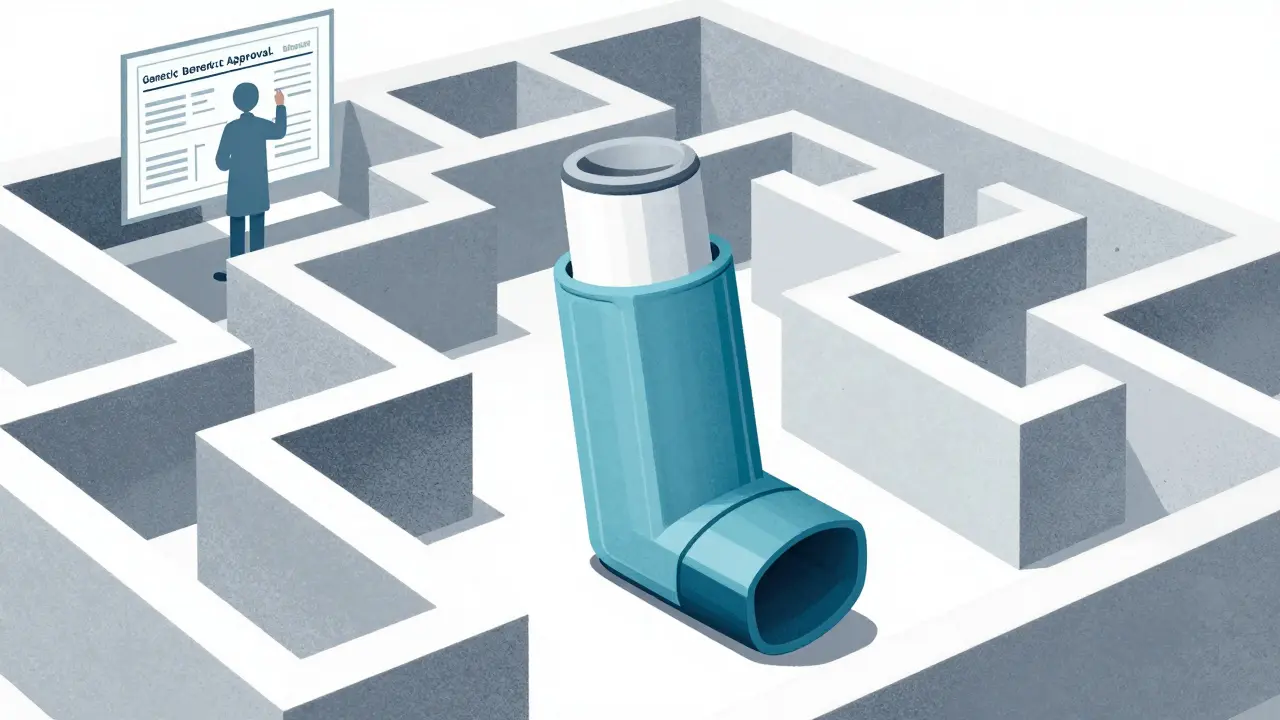
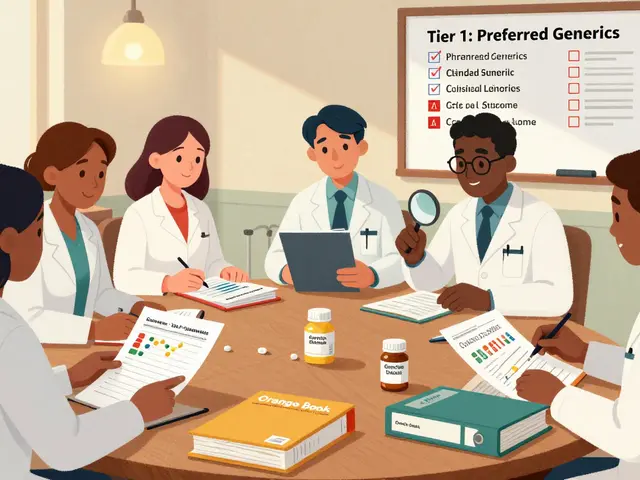
Not all pills are created equal, and the regulatory burden shifts heavily depending on the complexity of the formulation. Standard tablets might flow smoothly through the process, but "complex generics"-like nasal sprays, inhalers, or injectables-face unique hurdles. These products often have delivery systems that are patented alongside the drug itself. In 2015, a policy shift changed how the FDA provides feedback on these formulations.
Complex Generics are medicines with unique dosage forms or delivery methods that require higher scrutiny during development. The problem lies in the lack of specific feedback regarding Q1/Q2 sameness requirements. This refers to the qualitative and quantitative identity of ingredients. Previously, the FDA would tell manufacturers exactly what was wrong with their formula. Now, they often send a Complete Response Letter (CRL) stating a discrepancy exists without explaining precisely how to fix it.
The result is a cycle of trial-and-error. One executive shared with RAPS in August 2024 that their company spent $8.7 million over three reformulation attempts for a single nasal spray. That is money burned in the furnace of regulatory uncertainty. For every additional year of delay, a manufacturer loses potential revenue, but more importantly, patients lose access to affordable care. During the 2016 to 2020 period, approvals for testosterone replacement therapies were delayed by nearly five years, forcing patients to pay 300% more for brand-name versions.
Comparative Costs: Generic vs. Brand-Name
To truly grasp the value proposition, we must look at the alternative: developing a brand-new drug from scratch. The financial contrast highlights the efficiency intended by the generic pathway, even with the high user fees involved. The Prescription Drug User Fee Act (PDUFA) governs the approval of original brand medications, and those fees are exponentially higher because the safety and efficacy profile starts from zero.
In fiscal year 2025, the New Drug Application (NDA) fee hit $3.685 million per application. Comparatively, the approximate total for a generic ANDA sits around $375,000 when combining facility and product fees. Despite being ten times cheaper to file, the generic pathway still takes months of review time. The FDA targets a 10-month standard review and an 8-month priority review for generics. Brand drugs often face a similar initial timeline but with much higher scrutiny regarding clinical trials and long-term safety data.
This disparity underscores the economic argument for the FDA's user fee system. By subsidizing the review of safer, established molecule copies through lower relative fees, the agency theoretically creates a faster pipeline for competition. Market position data reveals that while generics command 90.3% of prescription volume, they account for only 12.2% of total drug expenditure. That 90% volume represents nearly four billion prescriptions, suggesting the system works economically for most standard products.
Navigating the Review Process Efficiently
If you are a stakeholder looking to minimize the cost impact, you must optimize the interaction with the review team. Data from the FDA's 2024 performance report indicates first-cycle approval rates for standard generics sit at 65%. For complex products, this drops to 42%, meaning more than half fail initially. The key strategy used by successful applicants is proactive engagement.
Type II meetings are the secret weapon here. Unlike informal chats, these are formal interactions requested specifically to discuss a submitted application. An AAM survey noted that 78% of successful applicants utilized these meetings. The result? A reduction in overall review times by an average of 3.2 months. Considering a month of exclusivity loss can cost millions in lost sales, investing in these meetings pays off quickly. Documentation has also expanded, with submissions averaging 200,000 pages now compared to fewer pages a decade ago. This inflation in paperwork adds approximately 35% to preparation costs according to Deloitte analysis, further emphasizing the need for precise quality assurance.
Future Outlook: GDUFA IV and Legislative Shifts
Looking ahead from March 2026, the regulatory horizon is shifting again. The FDA hosted public meetings in mid-2025 to prepare for GDUFA IV, covering the fiscal years 2028-2032. Industry proposals suggest annual fee increases of 3-5% to fund the necessary review staff expansion. Without these adjustments, inflationary pressures could reverse the gains made since 2013.
Simultaneously, legislation like H.R. 1843, introduced recently, aims to restore detailed formulation feedback for complex generics. With 72 co-sponsors as of late 2025, bipartisan support is building. If passed, the Congressional Budget Office estimates this could accelerate approvals for 12-15 complex drugs annually. The projected savings range from $1.8 to $2.3 billion per year. However, FDA leadership expressed concern in July 2025 that reversing policies without funding adequate resources could compromise review quality. As we move toward the authorization expiration in September 2027, balancing speed with safety remains the central debate.
Frequently Asked Questions
What is GDUFA and why does it exist?
The Generic Drug User Fee Amendments (GDUFA) is a program that collects fees from drug manufacturers to fund FDA review processes. It was created to address resource constraints and accelerate the approval of safe and effective generic drugs.
How much does a generic drug application fee cost in 2025?
In FY 2025, the product fee is $136,485 per application, and the facility fee is $238,055 per site. Smaller businesses with fewer than 1,000 employees may qualify for waivers, though the total costs remain significant for production infrastructure.
Why do complex generics take longer to approve?
Complex generics involve difficult delivery mechanisms like inhalers or transdermal patches. A 2015 FDA policy change reduced the specificity of feedback on ingredient formulation discrepancies, leading to longer trial-and-error reformulation phases that add years to development.
Can patients influence generic approval speeds?
Patient advocacy groups play a role by lobbying for transparency. Groups like Patients Rising advocate for legislative changes such as H.R. 1843, which seeks to mandate better FDA feedback loops to reduce unnecessary delays affecting patient access.
Is GDUFA IV going to increase costs further?
Discussions for GDUFA IV suggest potential annual fee increases of 3-5% to cover inflation and hiring needs. This is expected to begin taking effect after the current agreement expires in September 2027.


14 Comments
tyler lamarre March 28, 2026
Nobody ever considers the backend taxes until prices jump again honestly
Philip Wynkoop March 30, 2026
The table on facility fees was particularly useful for my own research :)
Monique Ball April 1, 2026
We must understand the nuance of facility fees versus product application costs deeply here! 😱 The difference between an ANDA and an NDA is often overlooked by the general public. It takes significant capital reserves just to stand up a manufacturing site under these rules! 💸 Every single dollar mentioned in that table represents actual resources diverted from direct care delivery. Even small businesses struggle with these mandatory payments for the FDA to function effectively. 😤 I find myself wondering how much more we could save if the review process was streamlined further. The delays mentioned in the complex generics section really hit home for patient advocates. Imagine needing insulin or specialized inhalers but being stuck waiting years! That is the human cost behind the regulatory paperwork discussed above. We need better feedback loops for formulation issues according to recent surveys. Many stakeholders remain unaware of these specific fiscal obligations unfortunately. Legislative changes like the one mentioned could accelerate access significantly for many groups. It is crucial we support policies that maintain quality while reducing unnecessary administrative drag. Transparency in these fees helps everyone understand the market dynamics at play currently! 👍 Sharing these insights helps the community stay informed today.
Aaron Olney April 1, 2026
Thats just crazy how much money is tied up in red tape lol
I cant beleive how hard it is to recieve approval sometimes
gina macabuhay April 2, 2026
The industry clearly prioritizes profit margins over patient safety protocols in many scenarios.
You cannot ignore the compliance requirements that keep substandard products off shelves entirely.
Shawn Sauve April 4, 2026
I appreciate the detailed breakdown of the facility fees here :)
It really puts things into perspective for everyone watching the sector grow.
Sophie Hallam April 4, 2026
It seems fair that regulators need funding to maintain such rigorous inspection standards.
Balancing speed and safety is indeed the most difficult challenge for the agency right now.
Sabrina Herciu April 5, 2026
In my professional view the GDUFA framework serves a critical economic purpose for the pharmaceutical pipeline.; The data indicates substantial efficiency gains when meetings are utilized correctly!!; Documentation requirements have expanded significantly over the last decade which adds complexity......
Eva Maes April 6, 2026
This analysis cuts through the foggy corporate rhetoric with surgical precision.
The hidden hemorrhage of capital spent on reformulation cycles is truly egregious.
Austin Oguche April 6, 2026
Thank you for posting this clarity on the subject matter. The legislative shifts noted are worth monitoring closely.
Sarah Klingenberg April 8, 2026
Really cool info for us to digest slowly :)
Thanks for putting this together.
Jeannette Kwiatkowski Kwiatkowski April 9, 2026
Obviously the elites understand the gravity of these fees before the rest of us do.
We tend to get lost in the weeds of technical details.
Jordan Marx April 10, 2026
ANDA submission strategy dictates our go-to-market velocity metrics significantly.
Type II meetings facilitate early alignment on CMC sections and reduce cycle times dramatically.
Monique Louise Hill April 11, 2026
Fair dinkum the system needs to work better for people down here too 😌.
Moral responsibility lies with policymakers to prioritize health equity over revenue generation.